






What's Happening?
Government agencies are advised to develop and implement clear, agency-reviewed moderation policies for their social media presence. This guidance from Percepture emphasizes that decisions regarding comment removal should not be based solely on sentiment.
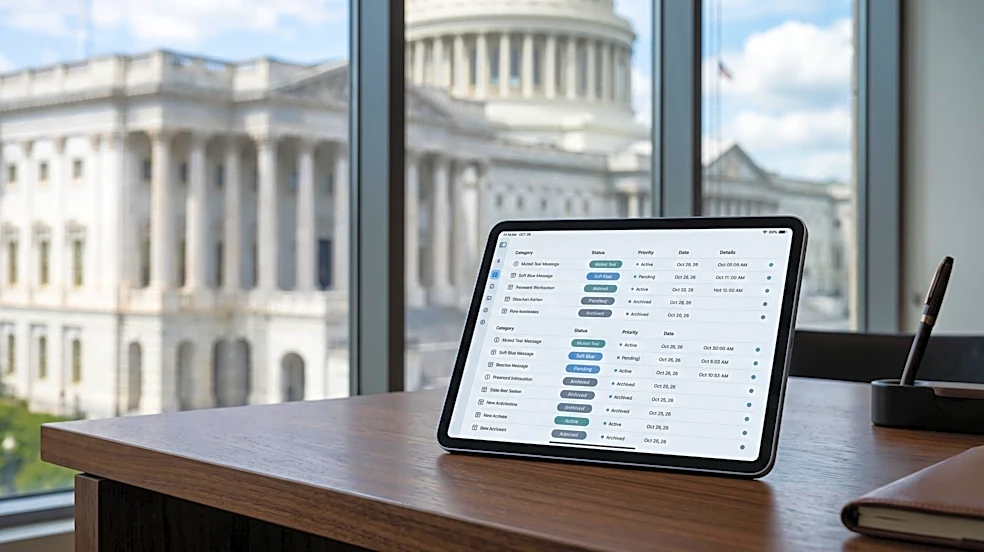
Instead, agencies need a defined process for applying moderation policies in accordance with applicable laws. The operating procedure should categorize comments into triage categories such as service questions, criticism, suspected spam, exposed personal information, and urgent concerns, rather than treating these as automatic grounds for deletion or blocking. It is crucial to document the reason for any moderation action, the reviewer involved, and the action taken, as directed by agency policy. Furthermore, a review path for disputed moderation decisions should be included to ensure fairness and transparency. The focus of the response process should remain on the issue at hand, irrespective of whether the commenter supports the agency. This structured approach aims to prevent arbitrary moderation and ensure legal compliance.
Why It's Important?
The establishment of robust social media moderation policies is critical for U.S. government agencies to maintain public trust, ensure legal compliance, and effectively manage their online communications. Without clear guidelines, agencies risk accusations of censorship, bias, or violating free speech principles, which can lead to public backlash and legal challenges. A well-defined policy provides a consistent framework for handling diverse public interactions, from legitimate inquiries to potentially harmful content, thereby protecting both the agency and its constituents. By distinguishing between different types of comments and having a documented process, agencies can demonstrate accountability and transparency. This is particularly important in an era where social media serves as a primary channel for public information dissemination and engagement, making the integrity of these platforms paramount for democratic processes and public service delivery. The absence of such policies can lead to inconsistent application of rules, potential legal liabilities, and erosion of public confidence in government communications.
What's Next?
Government agencies are expected to review their current social media practices and, if necessary, develop or refine their moderation policies to align with best practices and legal requirements. This will likely involve internal discussions to define clear guidelines for content removal, comment categorization, and dispute resolution. Agencies may also need to train staff responsible for social media management on these new or updated policies to ensure consistent application. Furthermore, there could be an increased emphasis on documenting all moderation actions and their justifications, creating a transparent record for accountability. The ongoing evolution of social media law and public expectations will necessitate continuous review and adaptation of these policies to remain effective and compliant. Agencies might also explore technological solutions to assist in content moderation, while ensuring human oversight and adherence to established protocols.
Beyond the Headlines
The push for structured social media moderation policies for government agencies reflects a broader societal challenge in balancing free speech with the need to manage harmful or misleading content online. This development highlights the increasing role of government in regulating digital spaces, not just as platforms for communication, but as extensions of public service. The ethical implications of content moderation are significant, as decisions can impact public discourse, access to information, and individual rights. The emphasis on documented processes and review paths underscores a growing demand for transparency and accountability from public institutions in the digital realm. This trend could lead to more formalized legal frameworks governing government social media use, potentially influencing how private entities also approach content moderation. The challenge lies in creating policies that are both effective in maintaining a constructive online environment and respectful of constitutional rights, particularly the First Amendment in the U.S. context.