




What's Happening?
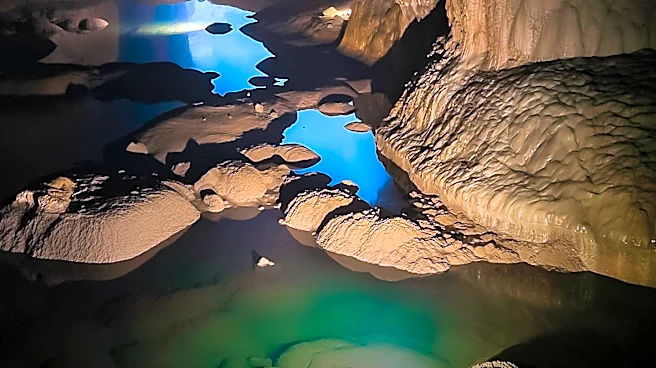
Hang Son Đoòng, located in Vietnam's Phong Nha–Kẻ Bàng National Park, is recognized as the world's largest natural cave. Discovered in 1990 by Ho Khanh and later surveyed in 2009, the cave features a massive passage that can accommodate a skyscraper and is wide
enough for a Boeing 747 to fly through. The cave's unique ecosystem includes an underground river and a forested area known as the Garden of Edam, where sunlight penetrates through a doline, creating a habitat for various species. The cave has been featured in documentaries, highlighting its ecological and geological significance.
Why It's Important?
The exploration of Hang Son Đoòng provides valuable insights into unique geological formations and ecosystems. It serves as a natural laboratory for scientists studying cave environments and biodiversity. The cave's discovery and subsequent exploration have also boosted eco-tourism in Vietnam, drawing attention to the importance of preserving natural wonders. Understanding such ecosystems can inform conservation efforts and highlight the need for sustainable tourism practices that protect these fragile environments.