

What's Happening?
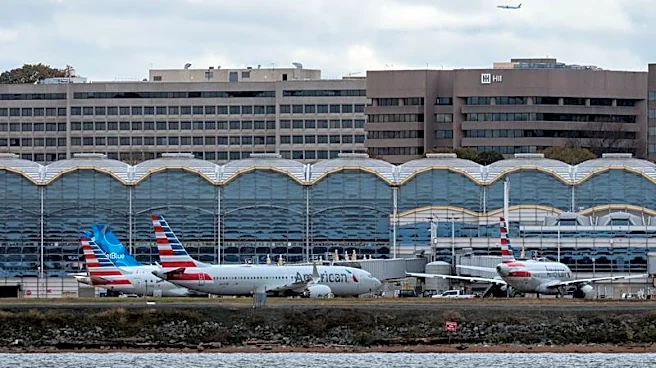
Democrats on the U.S. Senate Commerce, Science, and Transportation Committee have called for the Federal Aviation Administration (FAA) to halt further router installations by contractor L3 Harris. This demand follows a nationwide air travel ground stop
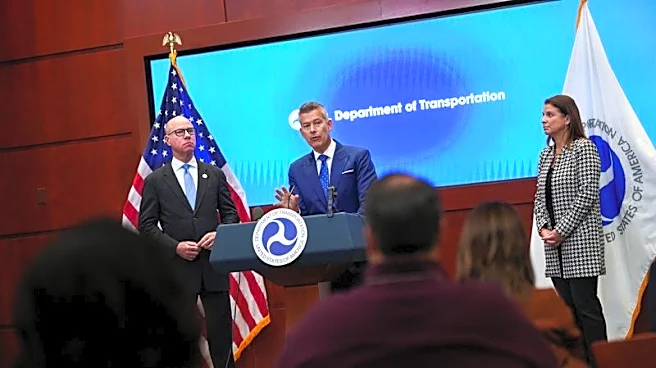
last week, which was attributed to a copper-to-fiber router installation by L3 Harris in Arkansas on November 13. The senators, led by Washington’s Maria Cantwell, the ranking member of the committee, expressed concern that thousands of similar installations are still pending. According to information provided by L3 Harris, the transition involves converting 3,648 routers to Juniper devices, with only 400 installed and 69 operational to date. The senators highlighted discrepancies between initial explanations from the Transportation Department and L3 Harris regarding the cause of the communications failure, fueling their concern that the root cause remains unidentified. They have requested a technical briefing by November 23 to address outstanding safety and reliability concerns before any expansion of the installation project.
Why It's Important?
This development is critical for national air travel safety and infrastructure reliability. The nationwide ground stop demonstrated the significant vulnerability of the U.S. air traffic control system to technical failures during infrastructure upgrades. The senators' call for a pause underscores a lack of confidence in the current implementation process and the clarity of information provided by both the FAA and its contractor. If the root cause of the November 13 failure is not fully understood and addressed, there is a substantial risk of future disruptions, which could have severe economic consequences for airlines, travelers, and related industries. The reliance on a single contractor, L3 Harris, and the specific technology from Juniper Networks for such a critical system also raises questions about vendor accountability and system resilience. Ensuring the safety and reliability of air travel infrastructure is paramount for public trust and economic stability.
What's Next?
The FAA and the Department of Transportation are expected to respond to the senators' request for a technical briefing by November 23. This briefing will be crucial in determining the immediate next steps for the router installation project. Depending on the information provided, the FAA may either pause further installations as requested by the senators or proceed with modifications to the current plan. Stakeholders, including airlines, air travelers, and aviation safety groups, will be closely watching these developments. The Senate committee may also consider further legislative action or oversight hearings if their concerns are not adequately addressed. The long-term implications could include a re-evaluation of FAA's contracting processes and oversight mechanisms for critical infrastructure projects, potentially leading to stricter regulations or increased scrutiny of contractors like L3 Harris and technology providers like Juniper Networks.
Beyond the Headlines
The incident highlights broader issues concerning the modernization of critical national infrastructure and the challenges of integrating new technologies into legacy systems. The copper-to-fiber transition is a significant upgrade aimed at improving communication reliability and speed, but its implementation has exposed potential weaknesses in planning, execution, and oversight. This situation could prompt a wider review of how federal agencies manage large-scale technological transitions, particularly in sectors vital to national security and economic function. It also brings to light the complex interplay between government agencies, private contractors, and technology developers, emphasizing the need for robust communication protocols and clear lines of accountability. The incident serves as a reminder that even seemingly minor technical glitches in interconnected systems can have cascading effects, underscoring the importance of thorough testing and risk assessment in all phases of infrastructure development.