
What's Happening?
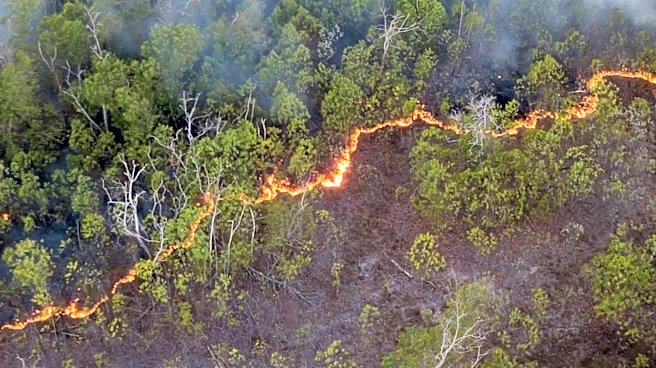
Wildfires are extensively sweeping across parts of Indonesia's Borneo island and Sumatra, severely impacting endangered orangutan populations. The intensified El Niño phenomenon has prolonged the dry season,
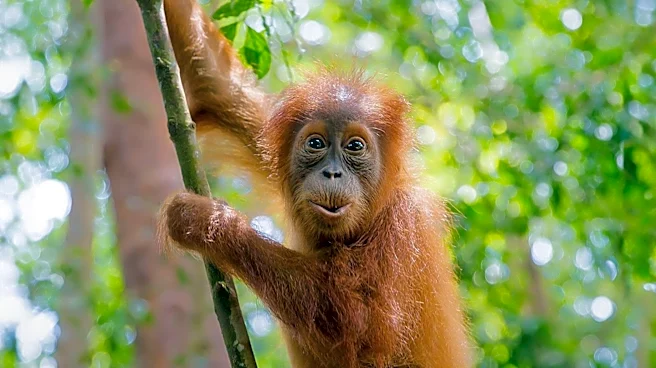
exacerbating the fires and creating dense haze. Rescuers are actively evacuating orangutans found injured, stranded, and surrounded by smoke. One such case involved a female Bornean orangutan named Novita, found clinging to a nearly leafless tree in Central Kalimantan province with burns on her hands and feet. Another, a male orangutan named Sampurna, died shortly after being rescued from a palm oil plantation in West Kalimantan. The Indonesian Forestry Ministry reports that over 270 wild animals in Kalimantan have been rescued, rehabilitated, or guided to safer habitats. Government data indicates that over 202,000 hectares of land burned between January and July, with independent estimates suggesting nearly 896,000 hectares by the end of August. The toxic haze has also caused health crises in neighboring countries, with smoke reaching as far as the Philippines and prompting an emergency declaration in Sarawak, Malaysia.
Why It's Important?
The escalating wildfires in Indonesia pose a critical threat to biodiversity, particularly to the already endangered orangutan species, which are vital for the health of rainforest ecosystems. The destruction of their habitat through these fires pushes these populations closer to extinction, impacting global conservation efforts. The widespread haze also has significant public health implications, causing respiratory issues for millions across Southeast Asia and disrupting daily life. For the U.S., this situation highlights the interconnectedness of global environmental challenges, as the loss of biodiversity in one region affects global ecological balance. U.S. conservation organizations and scientific communities often collaborate on international efforts to protect endangered species and combat climate change, making these fires a concern for their ongoing work and research. The economic impact of the haze on regional trade and tourism also has broader implications for global markets and supply chains.
What's Next?
As the El Niño conditions persist, the dry season is expected to continue, potentially leading to more widespread fires and further devastation. Firefighting efforts are hampered by water shortages, necessitating international assistance, such as that provided by Japan. Conservation agencies will likely continue their rescue and rehabilitation efforts for affected wildlife, but the long-term recovery of habitats will take decades. Governments in the region are under pressure to implement more effective fire prevention strategies and enforce regulations against illegal land clearing. International cooperation will be crucial for providing resources, expertise, and financial aid to combat the fires and mitigate their environmental and health impacts. Monitoring of air quality and public health advisories will remain critical for affected populations in Indonesia and neighboring countries.
Beyond the Headlines
Beyond the immediate crisis, these wildfires underscore the complex interplay of climate change, deforestation, and agricultural practices, particularly palm oil cultivation. The burning of peatlands, common in Indonesia, releases vast amounts of carbon dioxide, contributing significantly to global greenhouse gas emissions and exacerbating climate change. This cycle creates a feedback loop where a warmer climate leads to drier conditions, increasing fire risk. The plight of the orangutans serves as a poignant symbol of the broader ecological crisis, highlighting the urgent need for sustainable land management practices and stronger environmental governance. The recurring nature of these fires also raises ethical questions about corporate responsibility in supply chains linked to deforestation and the global demand for products that drive such practices. Addressing these deeper issues requires systemic changes in policy, industry practices, and consumer behavior worldwide.