








What's Happening?
The Illinois Environmental Protection Agency (EPA) has released a new Comprehensive Climate Action Plan, outlining a roadmap for the state to achieve net-zero greenhouse gas emissions by 2050. While Illinois has already reduced its carbon footprint by 32%
since 2005, primarily due to shifts in electricity generation towards natural gas and renewables, and improved fuel efficiency in transportation, current policies alone are insufficient to meet the 2050 target. The report indicates that without additional policy changes, net carbon emissions would only fall by 53% below the 2005 baseline by 2050. The plan proposes significant changes across various economic sectors, including transportation, building construction, manufacturing, agriculture, and waste disposal. These measures include incentives for converting commercial vehicles to electric, new regulations on residential and commercial buildings, and stronger methane monitoring for landfills. In 2024, the U.S. Environmental Protection Agency awarded Illinois a $430 million grant through the federal Climate Pollution Reduction Grant program, part of the Inflation Reduction Act, to support these emission reduction efforts.
Why It's Important?
This plan is crucial for Illinois as it aims to address climate change and transition to a cleaner economy, potentially setting a precedent for other states. The proposed measures, while requiring substantial investments from the state, private industry, and consumers, are projected to yield significant economic benefits. The report estimates that adopting all outlined measures could generate $21 billion annually in net economic benefits by 2050, including substantial health benefits from improved air quality. Specifically, air quality improvements are expected to lead to 392 to 631 fewer premature deaths per year, translating to $8.8 to $13.8 billion in avoided healthcare costs and increased worker productivity. This initiative highlights a strategic shift towards sustainable practices, impacting industries from energy and transportation to construction and agriculture, and underscores the economic advantages of proactive climate action.
What's Next?
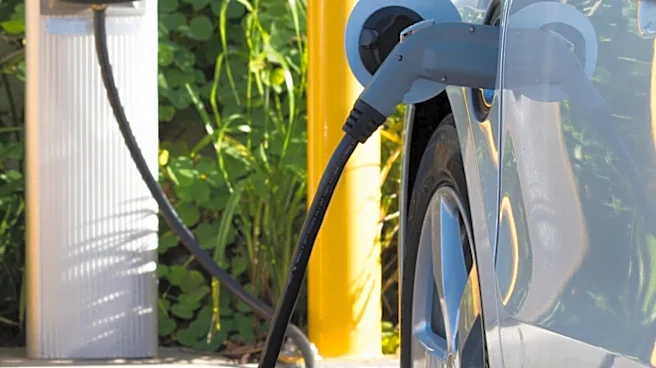
Illinois is expected to begin implementing the various components of the Comprehensive Climate Action Plan. This will involve enacting new regulations and incentive programs across multiple sectors. Key next steps include providing rebates and incentives for converting commercial vehicles to electric, adopting clean heat standards for natural gas emissions, offering subsidies for heat pump installations in homes, and implementing all-electric construction codes for new buildings. The plan also calls for phasing out gasoline-powered lawn and landscaping equipment by 2035 and introducing regulations for industrial activities like cement production. Additionally, stronger methane monitoring and abatement regulations for landfills, along with incentives for farmers to adopt carbon-reducing practices, are anticipated. The success of these initiatives will depend on continued state and federal funding, private sector cooperation, and public adoption of new technologies and practices.
Beyond the Headlines
The Illinois EPA's plan extends beyond immediate emission reductions, delving into deeper societal and economic transformations. It explores two scenarios for achieving net-zero, one emphasizing moderate efficiency and flexibility with full building electrification and rapid electric vehicle expansion, and another focusing on high efficiency and flexibility through reduced energy demand, shifting to multi-family housing, and increased public transportation. These scenarios suggest a fundamental rethinking of urban planning, residential development, and daily commuting habits. The plan also highlights the ethical dimension of climate policy, aiming to improve public health and reduce healthcare burdens, particularly for vulnerable populations affected by air pollution. The integration of federal grants, such as those from the Inflation Reduction Act, underscores a growing national commitment to supporting state-level climate initiatives, potentially fostering a more coordinated approach to environmental policy across the U.S.