









What's Happening?
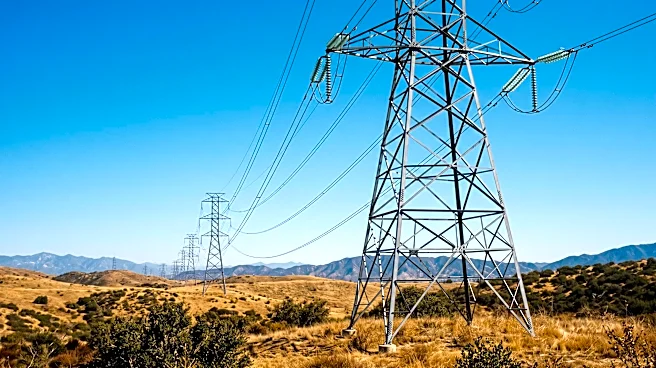
San Diego Gas & Electric's proposed Golden Pacific Powerlink Project, a 145-mile high-voltage power line, is facing significant opposition from residents and local officials in Temecula, California. The project, estimated at $1.6 billion, is intended
to run from the Imperial Valley to Orange County, with some power lines reaching up to 200 feet tall. Mark Winkler, president of Save Temecula, a citizens group, highlighted strong community resistance, citing a recent California Public Utilities Commission meeting where approximately 130 people, including four Temecula City Council members and Assemblywoman Kate Sanchez, voiced opposition despite the project not being on the official agenda. Critics argue the project poses fire hazards, could trap 15,000 residents due to limited evacuation routes, and would negatively impact property values. Save Temecula also disputes the utility commission's claim that the project is necessary to reduce grid congestion and strengthen the state's power system.
Why It's Important?
This opposition underscores a growing tension between infrastructure development and local community concerns in California. The Golden Pacific Powerlink Project, while aimed at enhancing grid reliability and reducing congestion, faces significant hurdles due to its perceived negative impacts on Temecula. The potential for increased fire risk in a region prone to wildfires, coupled with concerns about property value depreciation and limited evacuation routes, highlights the complex trade-offs involved in large-scale energy projects. The financial burden on ratepayers, who would ultimately bear the cost of the transmission line, is also a major point of contention. This situation reflects a broader challenge for utilities in balancing the need for modernizing and expanding energy infrastructure with environmental protection, public safety, and community well-being.
What's Next?
Save Temecula plans to continue its efforts to stop the project, including potentially pursuing legal action if the California Public Utilities Commission approves it. Mark Winkler indicated that the group is prepared to bring in expert witnesses to propose alternative routes and technologies that would place less burden on ratepayers and the environment. The project will undergo a review process by the utilities commission, which will decide its fate. The city of Temecula, Riverside County, and various water and school districts have also voiced their opposition, suggesting a united front against the current proposal. The outcome will depend on the commission's assessment of the project's necessity, its adherence to established codes, and the viability of proposed alternatives.
Beyond the Headlines
The conflict in Temecula reflects a deeper societal debate about the siting of critical infrastructure and the balance of power between large utility companies and local communities. The argument that the project offers no direct benefit to Temecula, essentially serving as an 'extension cord' through the city, raises questions about equitable distribution of burdens and benefits in regional development. The mention of the project running near the Elsinore Fault Zone and sacred land of the Pechanga tribe introduces environmental justice and cultural heritage considerations, adding layers of complexity beyond economic and safety concerns. This case could set a precedent for how future energy infrastructure projects are planned and implemented in California, emphasizing the need for early and meaningful community engagement and the exploration of less impactful alternatives.