






What's Happening?
A new artificial intelligence model from China, known as Kimi K3, has surprised the U.S. tech industry with its capabilities, which rival those of leading models like Anthropic's Claude and OpenAI's ChatGPT. Developed by Beijing-based startup Moonshot,
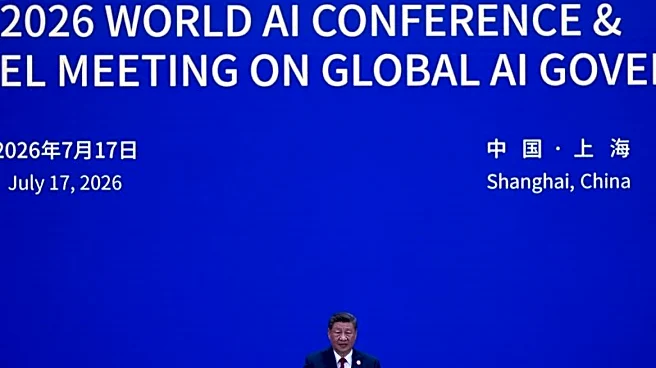
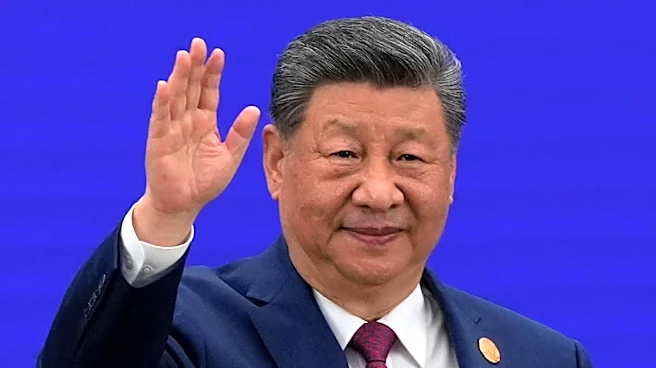
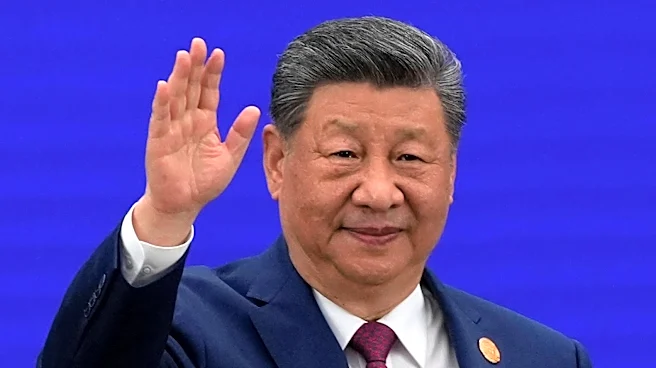
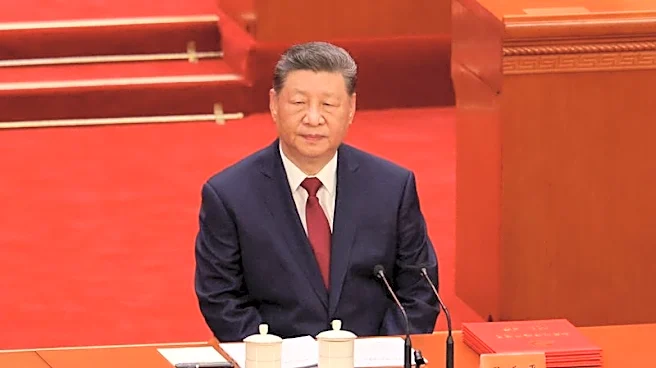
K3 has been recognized for its high performance in front-end coding capabilities, according to Arena, a platform for evaluating AI systems. The release of K3 coincides with Chinese President Xi Jinping's address at the World Artificial Intelligence Conference in Shanghai, highlighting China's growing efforts to develop domestic AI technology amidst U.S. restrictions on advanced tech imports. The K3 model is priced higher than previous Chinese models but remains more affordable than OpenAI's GPT-5.6 Sol model. This development has intensified the competition between Chinese and U.S. AI companies, with accusations from U.S. firms like Anthropic and OpenAI regarding the illicit distillation of their technologies by Chinese counterparts.
Why It's Important?
The emergence of the K3 model signifies a significant advancement in China's AI capabilities, challenging the dominance of U.S. tech giants in the field. This development could shift the competitive landscape, as Chinese models offer comparable performance at lower costs, potentially attracting global developers. The rivalry between the U.S. and China in AI technology is further fueled by geopolitical tensions and trade restrictions, which have prompted China to accelerate its domestic tech development. The success of open-source models like K3 also raises questions about the balance between innovation and security, as making powerful AI technologies publicly accessible could pose risks. The U.S. tech industry may need to reassess its strategies to maintain its competitive edge in the face of these emerging challenges.
What's Next?
As the K3 model gains traction, U.S. tech companies may need to innovate and enhance their offerings to remain competitive. The ongoing World Artificial Intelligence Conference in Shanghai could lead to further announcements and collaborations that bolster China's position in the AI sector. Additionally, the accusations of technology distillation could lead to increased scrutiny and potential legal actions, impacting international collaborations and the sharing of AI advancements. The U.S. government and tech industry stakeholders may also consider policy adjustments to address the competitive pressures and ensure the security of AI technologies.
Beyond the Headlines
The rise of Chinese AI models like K3 highlights the broader implications of open-source AI development. While open-source practices can drive innovation and democratize access to technology, they also pose challenges related to intellectual property and security. The debate over the ethical use of AI and the potential for misuse in various applications continues to be a critical concern. As AI technologies become more integrated into global industries, the need for international cooperation and regulatory frameworks becomes increasingly important to address these complex issues.