
What's Happening?
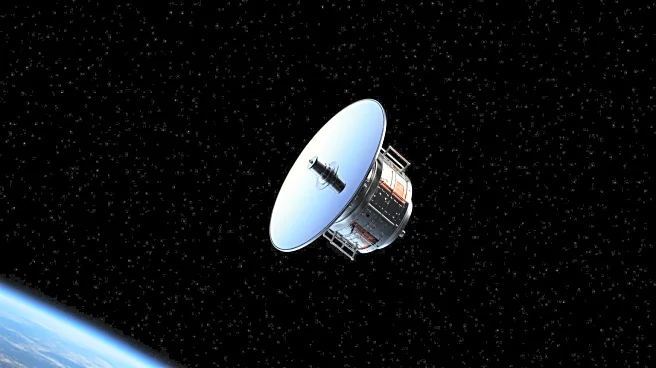
A California-based startup, Reflect Orbital, has proposed an ambitious plan to deploy a constellation of 4,000 giant mirrors into orbit by 2030. The goal is to redirect sunlight to Earth, extending daylight
hours by creating a 'soft, moonlike glow' in targeted areas. The company has applied for a license to test a demonstration satellite, EARENDIL-1, with a planned launch in April 2026. This initiative aims to provide continuous solar energy, even after sunset, by reflecting sunlight onto solar panels. However, the plan has sparked concerns among astronomers and biodiversity experts. They warn that the artificial extension of daylight could disrupt astronomical observations and negatively impact wildlife and human health.
Why It's Important?
The proposal by Reflect Orbital could revolutionize solar energy usage by providing a consistent power source, potentially reducing reliance on traditional energy forms. However, the plan raises significant concerns about light pollution, which could hinder astronomical research by making sky observations more challenging. The increased number of satellites also poses risks of collisions and contributes to space debris, complicating space exploration efforts. Additionally, the intense light from the mirrors could disrupt ecosystems, affecting wildlife behavior and potentially impacting human circadian rhythms. These factors highlight the need for careful consideration of the environmental and scientific implications of such technological advancements.
What's Next?
Reflect Orbital plans to proceed with testing its demonstration satellite in 2026, which will provide an opportunity to assess the real-world impact of their technology. The company has stated that it is addressing concerns by ensuring the light beam is localized and limited in duration. However, ongoing dialogue with astronomers, environmentalists, and regulatory bodies will be crucial to address the broader implications. The outcome of these discussions and the results of the demonstration will likely influence future regulatory decisions and the potential scaling of the project.
Beyond the Headlines
The introduction of space mirrors could lead to broader discussions about the ethical implications of altering natural light cycles. The potential for such technology to affect global ecosystems and human health raises questions about the balance between technological advancement and environmental stewardship. This development may also prompt a reevaluation of international space regulations, as the proliferation of satellites continues to grow. The project underscores the need for a global framework to manage the impact of space-based technologies on Earth.