
What's Happening?
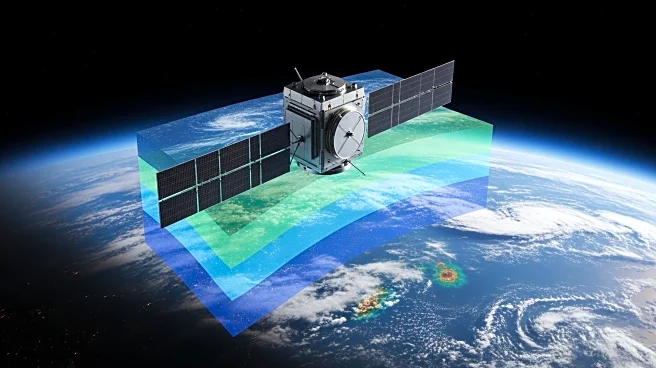
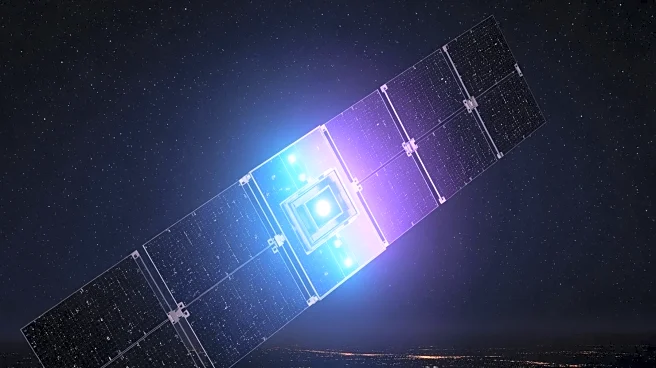
NASA's Tropospheric Emissions: Monitoring of Pollution (TEMPO) instrument has demonstrated a new capability to collect nighttime light data. Originally designed to measure trace gases like nitrogen dioxide
and ozone, TEMPO can now observe low-light phenomena such as city lights, aurorae, and moonlit clouds. This development was highlighted in a study published in the American Geophysical Union's Earth and Space Sciences Journal. The new capability allows researchers to gain insights into light pollution and its effects on human health and wildlife. The TEMPO instrument, located at NASA's Langley Research Center, has set a record for data downloads, indicating significant interest and utility in its findings.
Why It's Important?
The ability to collect nighttime light data has important implications for understanding and mitigating light pollution, which can disrupt ecosystems and human circadian rhythms. By providing detailed observations of nighttime lights, TEMPO can inform policies aimed at reducing light pollution and its associated health impacts. Additionally, this capability enhances NASA's ability to monitor environmental changes and support disaster response efforts. The data collected by TEMPO can also contribute to advancements in weather forecasting and urban planning, highlighting the instrument's potential to influence a wide range of scientific and practical applications.
Beyond the Headlines
TEMPO's new capability to observe nighttime lights opens up opportunities for developing future sensors tailored to specific applications, such as monitoring energy usage and assessing the impact of artificial lighting on the environment. This advancement underscores the importance of interdisciplinary collaboration in expanding the utility of existing technologies. The insights gained from TEMPO's data could lead to more sustainable lighting practices and contribute to broader efforts to address environmental challenges. As researchers continue to explore the potential of nighttime light data, TEMPO's findings may drive innovation in sensor technology and environmental monitoring.