
What's Happening?
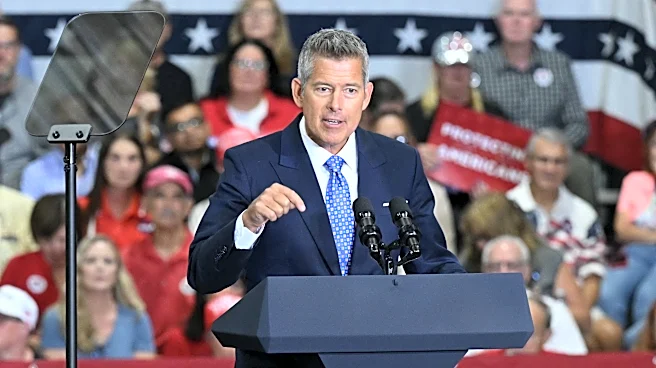
Representative Mike Bost, a Republican from Illinois, has introduced the Truck Parking Safety Improvement Act. This legislation proposes to dedicate $755 million towards the creation of additional truck
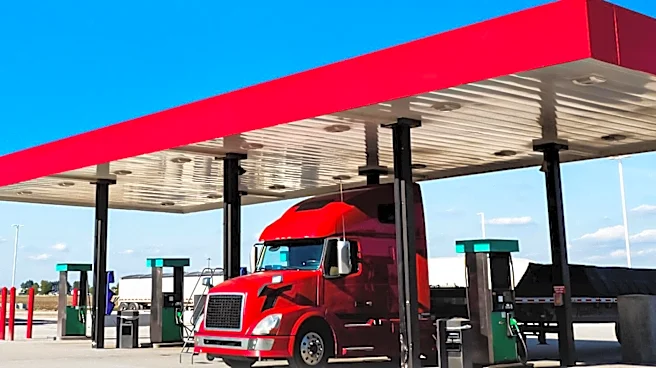
parking spaces across the United States. The initiative addresses a significant shortage of safe and adequate parking for commercial truck drivers. Currently, studies indicate that there is only one truck parking space available for every 11 trucks on the road. This scarcity often forces truck drivers to park in unsafe locations, such as highway shoulders, or to violate hours-of-service regulations. The Missouri Department of Transportation recently commenced a $33 million project to add 255 new truck parking spots at rest areas along Interstate 70 in Concordia, Boonville, Mineola, and Wright City, Missouri, with completion expected by 2028. This project, funded by the Infrastructure For Rebuilding America (INFRA) grant program, will increase the total number of spaces at these eight rest areas to 474. The improvements also include new pavement, lighting upgrades, and bathroom remodels at some locations.
Why It's Important?
The lack of sufficient truck parking facilities is a critical issue with far-reaching implications for the U.S. economy, supply chain, and public safety. The trucking industry is vital for transporting goods across the nation, and inadequate parking directly impacts driver safety and operational efficiency. When drivers struggle to find safe parking, they may resort to parking on highway shoulders, which poses risks to both the truck drivers and other motorists. Furthermore, the pressure to find parking can lead to violations of federal hours-of-service rules, contributing to driver fatigue and increasing the likelihood of accidents. The proposed $755 million allocation through the Truck Parking Safety Improvement Act, alongside projects like the one on I-70 in Missouri, aims to alleviate these pressures. By providing more designated and secure parking, the initiative can enhance road safety, improve the working conditions for truck drivers, and contribute to a more efficient and reliable supply chain, ultimately benefiting consumers and businesses nationwide.
What's Next?
The Truck Parking Safety Improvement Act, introduced by Rep. Mike Bost, will proceed through the legislative process, requiring consideration and potential approval by Congress. If passed, the dedicated $755 million would be allocated to fund the expansion of truck parking infrastructure across the country. Concurrently, projects like the one underway on I-70 in Missouri are expected to continue, with the additional 255 truck parking spaces anticipated to be completed by 2028. These localized efforts, combined with potential federal funding, will gradually increase the availability of safe parking for truck drivers. Stakeholders, including trucking associations and state transportation departments, will likely monitor the progress of both the federal legislation and ongoing construction projects, advocating for continued investment in this critical infrastructure. The success of these initiatives will be measured by their ability to reduce parking shortages, improve safety, and enhance the overall efficiency of the trucking industry.
Beyond the Headlines
The issue of truck parking extends beyond mere convenience; it touches upon broader themes of infrastructure investment, worker welfare, and the resilience of the national supply chain. The chronic shortage of truck parking highlights a systemic underinvestment in the foundational elements of commerce. Addressing this deficit is not just about adding spaces but about recognizing the essential role truck drivers play in the economy and ensuring their safety and well-being. The problem also underscores the need for integrated planning between federal, state, and local authorities, as well as private sector involvement, to develop comprehensive solutions. Furthermore, the environmental impact of trucks idling while searching for parking, or parking in unauthorized areas, could be mitigated by better-planned facilities. This initiative could set a precedent for future infrastructure projects that prioritize the often-overlooked needs of essential workers and the logistical backbone of the country.