







What's Happening?
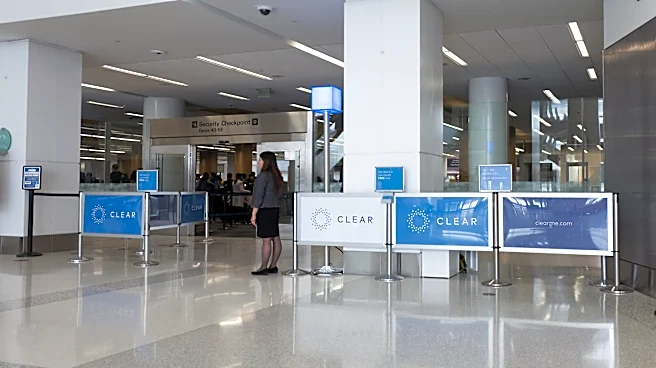
The Transportation Security Administration (TSA) has quietly scaled back its PreCheck 'Gateside' program, reducing its availability to the original 13 pilot airports after a brief, unannounced expansion to nearly 300 airports nationwide. The Gateside program allows
approved TSA PreCheck members to request terminal access for non-flying family members or friends, enabling them to pass through security to gates, shops, and restaurants without a boarding pass. The nationwide expansion in early October was short-lived, with the program quickly reverting to its initial cohort of airports. The TSA has not provided a formal, detailed public explanation for this sudden reduction, though participating airports have indicated that the rollback is to allow officials to evaluate checkpoint volume, security postures, and resource allocation. The official TSA portal still suggests a future broader rollout, but no specific timeline has been provided.
Why It's Important?
This rollback significantly impacts the convenience and travel experience for TSA PreCheck members and their companions across the U.S. The Gateside program offered a unique benefit, allowing families and friends to spend more time together at the airport, which was particularly valuable for those seeing off or picking up travelers. Its sudden contraction means that this convenience is now limited to a select few airports, potentially causing confusion and frustration for travelers who may have anticipated its availability elsewhere. For the airline industry and airport businesses, the program's expansion could have driven increased foot traffic and spending in terminal areas. The current limitation means these potential economic benefits are curtailed, and airports outside the 13 designated locations will not experience the enhanced customer service or commercial activity that the program could offer.
What's Next?
Travelers planning to utilize the Gateside program must now verify if their departure or meeting airport is among the 13 active locations. The TSA's statement about a future broader rollout, despite lacking a timeline, suggests that the program may eventually expand again, but likely with more careful planning and evaluation. Stakeholders, including airlines, airport authorities, and travel advocacy groups, will likely monitor the TSA's progress and potentially push for a more transparent and predictable expansion strategy. The agency's evaluation of checkpoint volume, security, and resource allocation will be crucial in determining the program's future scope and how it can be implemented effectively without compromising security or operational efficiency.
Beyond the Headlines
The fluctuating status of the Gateside program highlights the inherent tension between security protocols and passenger convenience in air travel. While the program aimed to enhance the travel experience, its rapid expansion and subsequent retraction underscore the complexities of implementing new security-related initiatives across a vast and diverse airport system. This situation also reflects a broader trend in government agencies where pilot programs are tested, sometimes expanded without public announcement, and then adjusted based on operational realities. It raises questions about the communication strategies employed by agencies like the TSA regarding changes that directly affect millions of travelers. Ultimately, the incident serves as a reminder that even seemingly minor policy shifts in air travel can have widespread implications for public perception, operational logistics, and the overall passenger journey.