

What's Happening?
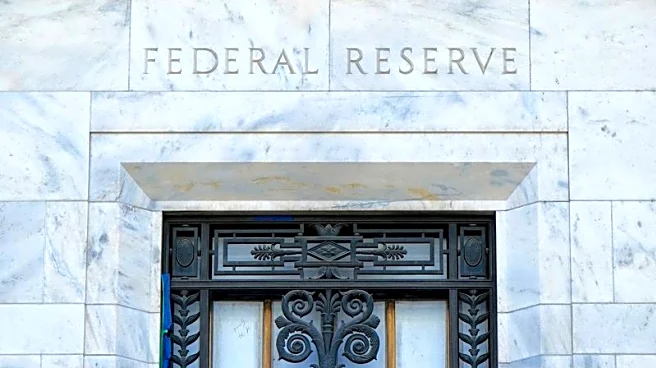
A federal judge has blocked subpoenas issued by the Department of Justice (DOJ) against Federal Reserve Chair Jerome Powell. The subpoenas were part of an investigation into Powell's management of renovations at the central bank. The judge, James Boasberg,
ruled that the investigation appeared to be an attempt to pressure Powell to lower interest rates or resign, rather than a legitimate inquiry into criminal activity. The ruling was criticized by DC US Attorney Jeanine Pirro, who labeled Boasberg an 'activist judge' and argued that the decision undermines the legal process. The investigation began after Powell allegedly made false statements to the Senate Banking Committee regarding a $2.5 billion renovation project. Despite the DOJ's efforts, the judge found no substantial evidence of wrongdoing by Powell.
Why It's Important?
This ruling is significant as it highlights tensions between the Federal Reserve and the Trump administration, particularly regarding interest rate policies. The decision to block the subpoenas could be seen as a defense of the Federal Reserve's independence, which is crucial for maintaining economic stability. The case also raises questions about the use of legal tools for political purposes, as the judge suggested the investigation was more about pressuring Powell than uncovering criminal activity. This could have broader implications for how future investigations are perceived, especially those involving high-profile government officials.
What's Next?
The DOJ, represented by Jeanine Pirro, plans to appeal the ruling, arguing that it sets a dangerous precedent by allowing individuals to evade investigations by claiming victimization. The appeal process could further strain relations between the DOJ and the Federal Reserve, and potentially impact the Fed's operations if the subpoenas are eventually enforced. Additionally, this case may influence how future legal actions against government officials are conducted, particularly in terms of balancing investigative needs with protecting institutional independence.