



What's Happening?
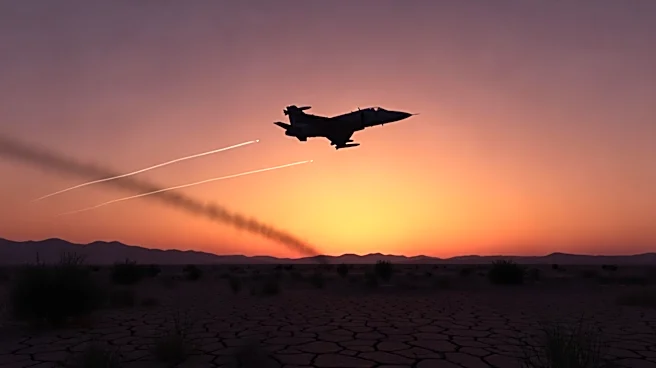
Iran has claimed responsibility for downing a U.S.-made F-35 fighter jet over its central region, asserting that the pilot likely did not survive. Iranian media released images purportedly showing the wreckage, which reportedly bore markings indicating
it was stationed at a British air force base. Concurrently, Kuwait reported fires at a refinery following an alleged Iranian drone strike, which the Kuwait Petroleum Corporation confirmed had caused significant damage. In northern Israel, sirens were activated in response to missile fire from Hezbollah in Lebanon, prompting the Israeli Defense Forces (IDF) to issue evacuation warnings for the Dahieh district of Beirut, a known Hezbollah stronghold. The IDF reported that 15 Hezbollah terrorists were killed in southern Lebanon following an airstrike.
Why It's Important?
This development heightens tensions in the Middle East, potentially impacting U.S. foreign policy and military strategy in the region. The downing of a U.S. aircraft by Iran could escalate military confrontations, affecting diplomatic relations and regional stability. The involvement of Kuwait and Israel indicates a broader regional conflict, which could disrupt oil supplies and impact global markets. The situation underscores the fragile security environment in the Middle East, with potential implications for U.S. allies and interests in the region.
What's Next?
The international community will likely monitor the situation closely, with potential diplomatic interventions to de-escalate tensions. The U.S. and its allies may reassess their military presence and strategies in the region. Further military actions by Iran, Israel, or Hezbollah could lead to increased conflict, prompting responses from global powers. The situation may also influence upcoming diplomatic talks and negotiations involving Middle Eastern countries.