



What's Happening?
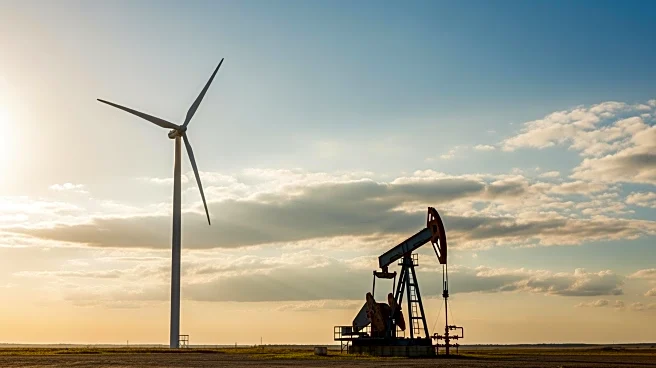
Oklahoma, historically rooted in the oil and gas industry, is facing significant environmental challenges due to abandoned wells and fracking operations. The state has cataloged approximately 20,000 orphan wells, with estimates suggesting the true number
could exceed 300,000. These wells pose environmental risks, including groundwater contamination and increased earthquake hazards. Despite these challenges, Oklahoma is making strides in renewable energy, ranking third in the U.S. for total renewable energy production. The state generates 47% of its electricity from renewable sources, primarily wind power, and is exploring additional opportunities in solar and geothermal energy.
Why It's Important?
The transition to renewable energy in Oklahoma is crucial for mitigating the environmental impact of its extensive oil and gas infrastructure. The state's efforts to increase renewable energy production could serve as a model for other regions with similar challenges. By investing in renewables, Oklahoma can reduce its reliance on fossil fuels, decrease pollution, and potentially create new economic opportunities. The shift also aligns with broader national and global trends towards sustainable energy solutions, which are essential for addressing climate change and ensuring long-term environmental health.
What's Next?
Oklahoma's renewable energy sector is poised for growth, with plans for significant solar capacity expansion. Companies like Leeward Renewable Energy and NextEra Energy are planning large-scale solar projects, which could dramatically increase the state's solar output. Additionally, the exploration of geothermal energy from existing oil and gas wells presents a unique opportunity to repurpose infrastructure for sustainable energy production. The state's ability to navigate political and economic challenges will be critical in realizing these renewable energy goals.
Beyond the Headlines
The push for renewable energy in Oklahoma highlights the complex interplay between environmental sustainability and economic interests. The state's deep ties to the oil and gas industry present both obstacles and opportunities for innovation. As renewable energy becomes more integrated into Oklahoma's economy, it may influence policy decisions and shift public perception towards more sustainable practices. This transition could also inspire other states with similar industrial legacies to pursue renewable energy solutions.