



What's Happening?
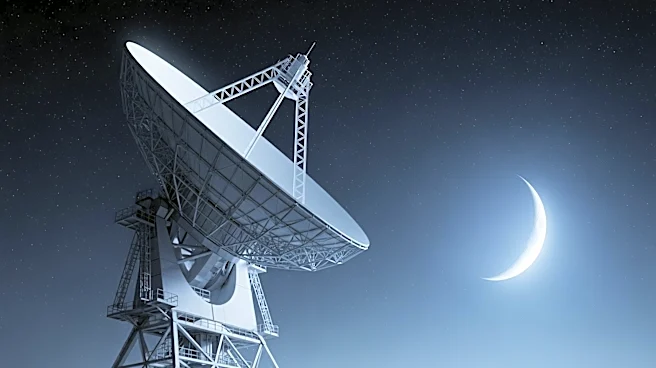
Australia's Parkes radio telescope, known as 'The Dish,' is playing a crucial role in tracking NASA's Artemis II mission, the first crewed lunar mission in over 50 years. The telescope, along with the Canberra Deep Space Communication Complex, is part
of NASA's Deep Space Network, providing vital communication support for the mission. The Artemis II mission involves a crew of four astronauts who will orbit the Earth before heading to the moon and returning to Earth. This mission is a significant step towards establishing a sustainable human presence on the moon.
Why It's Important?
The involvement of Australia's Parkes telescope highlights the importance of international collaboration in space exploration. The Artemis II mission is a precursor to future lunar landings and the establishment of a lunar base, which could serve as a launchpad for missions to Mars. The success of this mission could lead to advancements in space technology and inspire further international partnerships in space exploration. It also underscores the strategic importance of Australia's role in global space initiatives.
What's Next?
Following the Artemis II mission, NASA plans to conduct additional missions to prepare for a lunar landing in 2028. The agency aims to establish a lunar base as a stepping stone for future Mars missions. Australia's continued involvement in these missions could enhance its position as a key player in international space exploration efforts. The success of Artemis II will be closely monitored by international partners and private companies involved in space exploration, potentially influencing future collaborations and investments in space technology.