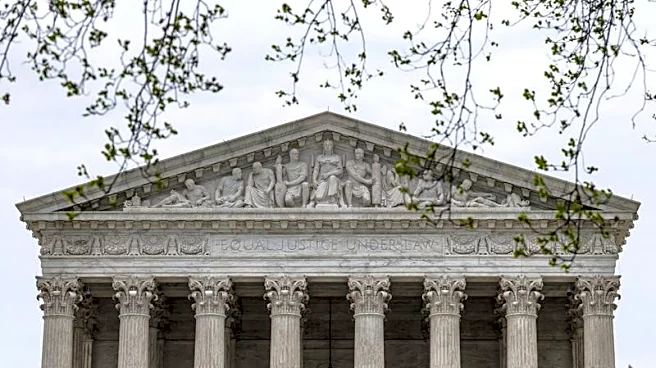









What's Happening?
A recent opinion piece has sparked discussion about the role of Supreme Court justices and their independence. The piece critiques the notion that justices like David Souter betrayed conservatism by acting independently rather than adhering strictly to
conservative ideologies. The article argues that a justice's role is to uphold integrity, courage, and intellectual consistency, rather than to serve political agendas. It highlights past decisions by justices such as Souter, who prioritized legal precedent and public trust over political pressures. The debate touches on broader issues of judicial activism and the expectations placed on Supreme Court justices by political factions.
Why It's Important?
This discussion is crucial as it addresses the fundamental principles guiding the U.S. judicial system, particularly the balance between judicial independence and political influence. The debate over what constitutes a 'conservative' justice reflects broader tensions within the political landscape, where judicial appointments are often seen as extensions of political power. The outcome of this debate could influence future nominations and the public's perception of the Supreme Court's role in American democracy. It also raises questions about the long-term impact of judicial decisions on societal norms and legal precedents.
Beyond the Headlines
The conversation about Supreme Court justices' independence versus political alignment has deeper implications for the integrity of the judicial system. It challenges the notion of a politicized judiciary and emphasizes the importance of maintaining a non-partisan approach to legal interpretation. This debate also highlights the potential risks of eroding public trust in the judiciary if justices are perceived as mere extensions of political ideologies. The long-term health of the U.S. legal system may depend on reaffirming the principles of judicial independence and impartiality.