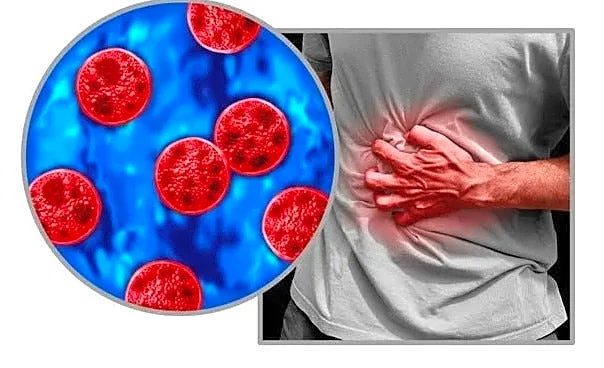









What's Happening?
Researchers at the University of South Florida (USF) have successfully identified a specific region of the malaria parasite that can be effectively targeted by antibodies. This discovery marks a significant advancement in malaria research, coming after
four decades of efforts that primarily focused on less effective areas of the parasite. The breakthrough offers a potential new pathway for the development of a malaria vaccine. The research indicates a shift in understanding how the human immune system can combat the malaria parasite, moving towards more precise and potentially more successful interventions. This identification could lead to more targeted vaccine strategies, improving the efficacy of future preventative measures against the disease. The findings were highlighted in recent reports detailing Tampa Bay and Florida headlines.
Why It's Important?
This discovery by USF Health researchers holds substantial importance for global public health, particularly in regions heavily affected by malaria. Malaria remains a significant cause of morbidity and mortality worldwide, and the development of a highly effective vaccine has been a long-standing challenge. By pinpointing a specific, vulnerable region of the parasite, scientists can now design vaccines that elicit a more potent and protective antibody response. This could lead to a new generation of malaria vaccines that are more effective than current options, potentially saving millions of lives and reducing the burden on healthcare systems in endemic areas. For the U.S., this research reinforces its role in global health innovation and could contribute to international efforts to eradicate malaria, preventing its re-emergence or spread.
What's Next?
The next steps following this discovery will likely involve further research and development to translate these findings into a viable vaccine candidate. Scientists will need to conduct preclinical studies to test the efficacy and safety of vaccine formulations designed to target this newly identified parasite region. This will be followed by clinical trials in humans to assess the vaccine's ability to induce a protective immune response and prevent malaria infection. Collaboration with pharmaceutical companies and international health organizations will be crucial to accelerate the development and eventual distribution of any successful vaccine. The long-term goal is to integrate this new vaccine into existing malaria control programs, potentially leading to a significant reduction in malaria cases globally.
Beyond the Headlines
Beyond the immediate implications for vaccine development, this research underscores the critical role of persistent scientific inquiry and the re-evaluation of long-held assumptions in medical science. The fact that this breakthrough occurred after 40 years of targeting 'wrong areas' highlights the iterative nature of scientific progress and the importance of continuous innovation. This discovery could also inspire similar approaches in research for other complex parasitic diseases, where traditional vaccine development has faced significant hurdles. Ethically, a highly effective malaria vaccine could address health disparities, as malaria disproportionately affects vulnerable populations in low-income countries. The success of such a vaccine would represent a triumph of global health equity and scientific collaboration.