


What's Happening?
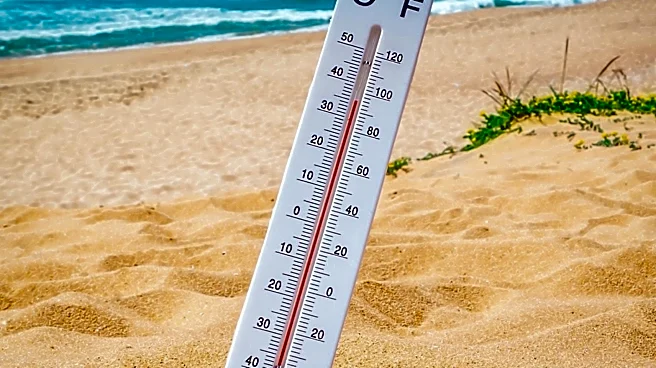
St. Louis has officially recorded its longest 90-degree season, spanning 191 days from March 22 to September 27, breaking a record set in 1950. This extended period of high temperatures included September being the warmest on record for the city, with
an average temperature of 78.4 degrees, surpassing the previous record from 2019. According to Jayson Gosselin, a meteorologist with the National Weather Service in St. Louis, the month did not experience a single day with a below-normal average temperature until September 22. The city also saw three record high temperatures and six record warmest low temperatures during September. The influence of climate change was detectable in St. Louis' temperature for 14 days last month, as reported by Climate Central's Climate Shift Index. Furthermore, a heat advisory issued by the National Weather Service that ended on September 19 was the latest such advisory in over two decades.
Why It's Important?
The unprecedented length of St. Louis's 90-degree season and the record-warm September highlight significant shifts in local climate patterns, with potential implications for public health, infrastructure, and resource management. Prolonged heat can lead to increased risks of heat-related illnesses, particularly for vulnerable populations, and place additional strain on healthcare systems. The sustained warmth also impacts energy consumption, as demand for air conditioning rises, potentially leading to higher utility costs for residents and businesses. Agriculturally, extended periods of heat and the accompanying dry stretch, which is expected to persist or worsen, can exacerbate drought conditions, affecting crop yields and water resources. This trend underscores the broader challenges posed by climate change, necessitating adaptations in urban planning, public services, and environmental policies to mitigate adverse effects and ensure community resilience.
What's Next?
Following the record-breaking heat, St. Louis is expected to experience cooler mornings and mild to warm days over the upcoming weekend, with temperatures reaching up to 79 degrees on Sunday. However, a warming trend is anticipated for the following week, with temperatures potentially returning to the mid and upper 80s. This period is also projected to be dry, indicating that existing low to moderate drought conditions will likely continue or intensify. Local authorities and residents may need to remain vigilant regarding water conservation efforts and public health advisories related to heat. The National Weather Service will continue to monitor temperature trends and drought conditions, providing updates as necessary. The long-term implications of these weather patterns could prompt further discussions and actions regarding climate resilience strategies within the city.
Beyond the Headlines
The extended and record-breaking heat in St. Louis points to a deeper narrative about the accelerating impacts of climate change on urban environments. The detectable influence of climate change on 14 days of September's temperatures, as noted by Climate Central's Climate Shift Index, moves the conversation beyond mere weather fluctuations to a more systemic environmental transformation. This prolonged warmth can alter local ecosystems, affecting biodiversity and the natural water cycle. Socially, it can exacerbate inequalities, as access to cooling and green spaces often varies across different neighborhoods, disproportionately affecting lower-income communities. The need for updated infrastructure, such as more resilient power grids and expanded public cooling centers, becomes more urgent. This situation in St. Louis serves as a microcosm of the broader challenges facing U.S. cities in adapting to and mitigating the effects of a changing climate, prompting a reevaluation of urban development and public health strategies.