
What's Happening?
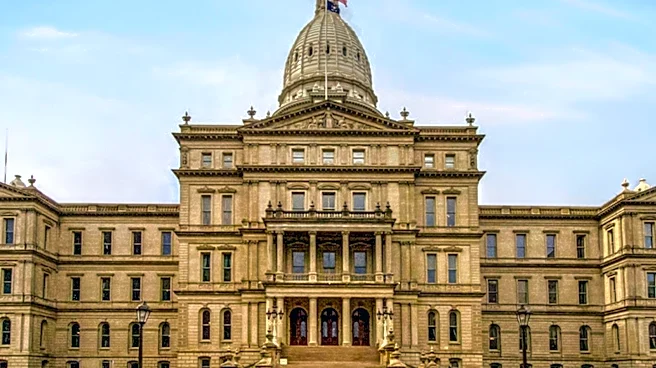
The Michigan Senate has overwhelmingly passed House Bill 5514, a legislative measure aimed at safeguarding children from inhumane transportation methods to residential treatment programs. State Representative
Cam Cavitt introduced the bill, which seeks to strengthen protections for minors transported by private companies to youth treatment facilities. The legislation specifically prohibits the use of blindfolds, hoods, handcuffs, chains, or other restraints on children during transport. Additionally, it bans companies from picking up children for transport between 9 p.m. and 6 a.m., ensuring that vulnerable youth are transported under safer and more appropriate conditions. Paris Hilton, founder of 11:11 Media Impact, has publicly celebrated the Senate's vote, emphasizing that Michigan will not tolerate abusive youth transport practices. She expressed gratitude to Representative Cavitt for his leadership and to the survivors who shared their experiences, making this progress possible. The bill now awaits the Governor's signature to become law.
Why It's Important?
This legislative action is significant for child welfare and human rights in Michigan, setting a precedent for how private transportation services for youth treatment programs are regulated. The bill addresses critical concerns regarding the safety and dignity of children during what can be a traumatic transition period. By prohibiting specific restraint methods and restricting transport hours, it aims to prevent practices that have been likened to 'simulated kidnappings,' which can inflict further psychological harm on already vulnerable youth. The bipartisan support for HB 5514 underscores a collective commitment to protecting children and ensuring that parents can trust the systems responsible for their care. Paris Hilton's involvement highlights the growing public and celebrity advocacy for reforms in the youth residential treatment industry, drawing national attention to issues that often remain hidden. This bill could serve as a model for other states looking to implement similar protections, potentially influencing national standards for youth transport and care.
What's Next?
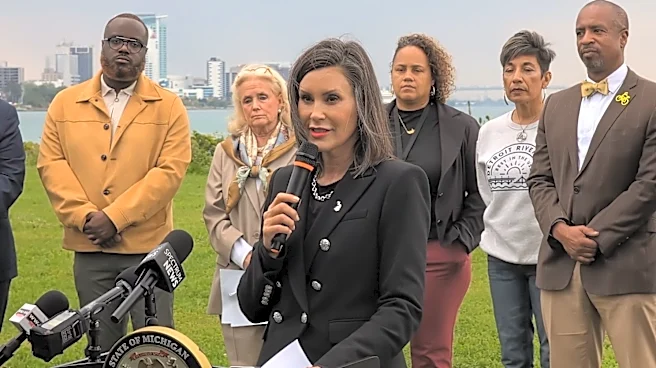
House Bill 5514 will now proceed to the Governor's office for final approval. Paris Hilton has urged Governor Whitmer to sign the bill into law, emphasizing its importance in making Michigan a safer place for children seeking care. If signed, the legislation will immediately impact private transportation companies operating in Michigan, requiring them to adjust their practices to comply with the new prohibitions on restraints and transport hours. This will necessitate a review of current protocols and potentially new training for staff to ensure adherence to the law. Advocacy groups and child welfare organizations will likely monitor the implementation of the bill and its effectiveness in protecting children. Furthermore, the success of this legislation in Michigan could inspire similar legislative efforts in other states, potentially leading to a broader movement for reform in the youth residential treatment industry across the United States.
Beyond the Headlines
The passage of HB 5514 touches upon deeper ethical and societal implications concerning the treatment of vulnerable populations and the oversight of private services within the care industry. The 'simulated kidnapping' practices described in the context of youth transport raise questions about the balance between therapeutic intent and the methods employed, highlighting a need for greater transparency and accountability. The involvement of public figures like Paris Hilton, who has openly shared her own experiences with the troubled teen industry, brings a powerful personal narrative to legislative efforts, transforming what might otherwise be a niche issue into a widely recognized human rights concern. This bill also underscores the ongoing challenge of regulating private entities that operate within sensitive sectors like child welfare, where profit motives can sometimes conflict with the best interests of those being served. The long-term impact could extend to a re-evaluation of the entire youth residential treatment ecosystem, pushing for more humane, evidence-based, and regulated approaches to care.