










What's Happening?
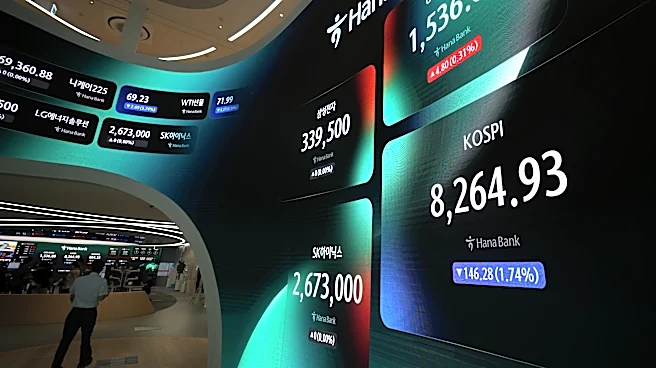
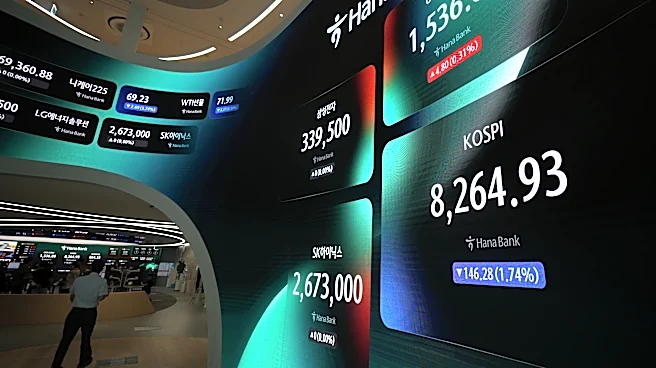
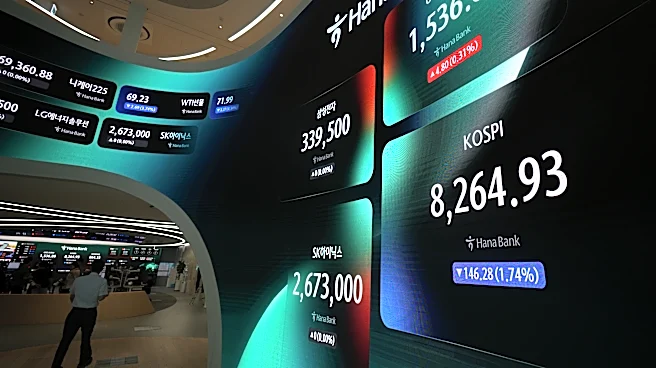
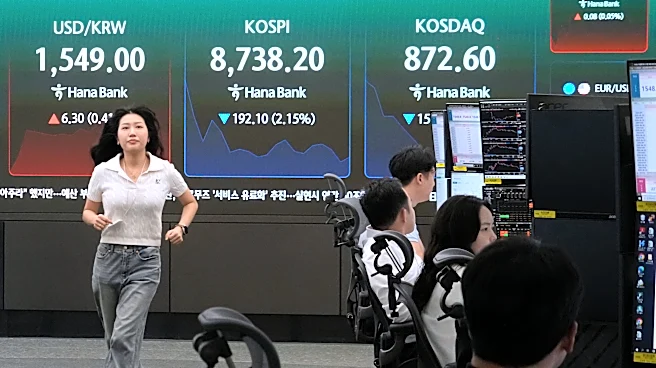
Asian stock markets displayed mixed results as concerns linger over the potential deal between Iran and the U.S. regarding the Strait of Hormuz. Japan's Nikkei 225 index rose by 0.6%, while Australia's S&P/ASX 200 fell by 0.4%. South Korea's Kospi experienced
a significant drop of 1.8%, and the Shanghai Composite saw a slight increase of 0.1%. The trading session in Hong Kong was closed. The uncertainty stems from ongoing negotiations in Qatar, where U.S. envoys are discussing the implementation of the deal with Iran, although direct talks with Iranian diplomats are not planned. Meanwhile, oil prices saw a slight increase, with U.S. crude rising by 37 cents to $69.87 per barrel and Brent crude increasing by 30 cents to $73.25 per barrel.
Why It's Important?
The mixed performance in Asian markets highlights the global economic sensitivity to geopolitical developments, particularly in the Middle East. The Strait of Hormuz is a critical chokepoint for global oil supply, and any disruption or uncertainty in this region can have significant implications for global energy markets. The ongoing negotiations and their outcomes could influence oil prices and, consequently, the broader economic landscape. Additionally, the performance of U.S. stocks, particularly in the artificial intelligence sector, reflects broader market trends and investor sentiment. The recent volatility in AI stocks underscores the challenges and opportunities within this rapidly evolving industry.
What's Next?
The outcome of the negotiations in Qatar will be closely monitored by global markets, as any progress or setbacks could impact oil prices and market stability. Investors will also be watching for further developments in the AI sector, as companies continue to navigate the balance between investment and profitability. The potential for future interest rate hikes by the Federal Reserve could also influence currency markets, particularly the U.S. dollar and Japanese yen exchange rates.