






What's Happening?
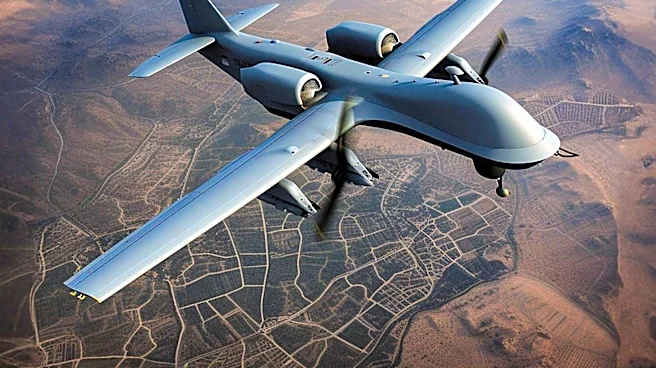
Sparc AI Inc. has developed Overwatch, a software solution designed to enable drones to navigate effectively even when GPS signals are jammed or spoofed. This technology utilizes a drone's existing telemetry data, sending it through an application programming
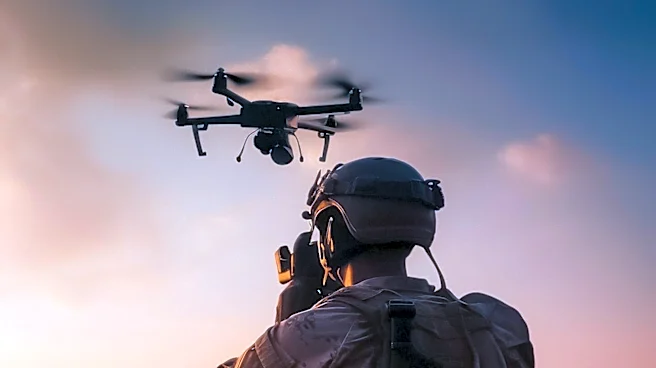
interface (API) to Sparc's Overwatch Positioning Network. The network then calculates the drone's position and returns precise latitude and longitude coordinates within approximately one-third of a second, without requiring new hardware on the aircraft. The company has tested Overwatch under live GPS jamming conditions near Ukraine's front line, where it successfully provided accurate positioning and target coordinates for a quadcopter. Additionally, a Middle Eastern government ministry has flown Overwatch on its own drones under GPS spoofing conditions, achieving similar results. Sparc also launched Overwatch Patrol, a positioning app for soldiers and security personnel, at the MSPO defense show in Poland.
Why It's Important?
The increasing prevalence of GPS jamming and spoofing in conflict zones poses a significant challenge for military operations and drone technology. As militaries, including the U.S. Pentagon's Drone Dominance program, plan to acquire hundreds of thousands of low-cost drones, the ability to operate in GPS-degraded environments is paramount. Sparc AI's Overwatch software directly addresses this critical need by providing a resilient navigation alternative. This innovation can enhance the effectiveness and survivability of drones in contested airspace, potentially reducing reliance on vulnerable satellite navigation systems. The market for alternatives to GPS is projected to grow substantially, indicating a strong demand for such solutions. Companies like Sparc AI are positioned to capitalize on this growing market, offering a software-centric approach that avoids the high costs and complexities associated with hardware-based alternatives.
What's Next?
Sparc AI is actively pursuing further integration and market expansion for its Overwatch technology. The company recently signed a memorandum of understanding with a major European drone manufacturer to integrate Overwatch into fixed-wing aircraft. Sparc is also working with various drone makers to extend Overwatch's capabilities to unmanned ground vehicles and is seeking a NATO Stock Number to facilitate its procurement by allied supply systems. These steps indicate a strategic push to embed Overwatch within military and defense ecosystems globally. Continued testing and successful deployments in real-world scenarios, particularly in active conflict zones, will be crucial for demonstrating the system's reliability and securing broader adoption among defense contractors and government agencies.
Beyond the Headlines
The development of technologies like Sparc AI's Overwatch highlights a broader shift in military strategy towards resilient and adaptable systems. The vulnerability of GPS to jamming and spoofing has prompted a re-evaluation of navigation and positioning methods, pushing for solutions that can operate independently of satellite signals. This trend could lead to a more decentralized and robust approach to military technology, where individual units and platforms possess greater autonomy and resilience. Furthermore, the focus on software-based solutions for critical functions like navigation could accelerate the adoption of artificial intelligence and machine learning in defense applications, potentially transforming how military assets are deployed and managed in complex operational environments. The ethical implications of increasingly autonomous drones operating without traditional GPS guidance will also be a growing area of discussion.