








What's Happening?
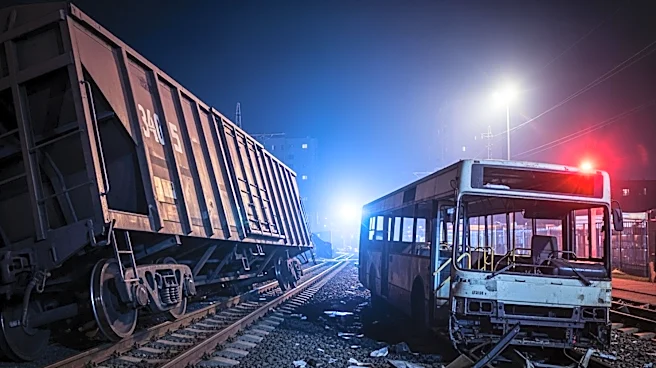
A tragic accident occurred in Bangkok, Thailand, where a freight train collided with a public bus at a rail crossing near the Makkasan station. The collision resulted in the deaths of at least eight individuals, all of whom were on the bus, and left 32
others injured. The incident took place when the bus stopped on the tracks at a red light, preventing the crossing barriers from closing. The train, which was transporting containers, was unable to halt in time, leading to the collision. The impact caused the bus to catch fire, and several nearby vehicles were dragged along the tracks. Emergency services, including firefighters and rescue crews, responded promptly to control the blaze and rescue victims. The fire was eventually brought under control, and authorities are currently investigating the cause of the incident.
Why It's Important?
This incident highlights the ongoing safety challenges faced by Thailand's transportation infrastructure. According to the World Health Organization, Thailand's roads are among the world's deadliest due to weak enforcement of safety standards. The collision underscores the urgent need for improved safety measures at rail crossings and stricter enforcement of traffic regulations to prevent such tragedies. The accident also raises concerns about the adequacy of emergency response systems in handling large-scale accidents and the need for better public awareness regarding rail crossing safety. The impact of this event extends beyond the immediate loss of life and injuries, as it calls for a reevaluation of transportation safety policies and infrastructure improvements to protect public safety.
What's Next?
Authorities in Thailand are conducting a thorough investigation to determine the exact cause of the collision and to identify any lapses in safety protocols. The findings could lead to policy changes aimed at enhancing safety at rail crossings and improving traffic management systems. There may also be increased pressure on the government to invest in infrastructure upgrades and to implement more rigorous safety standards. Additionally, public awareness campaigns may be launched to educate citizens about the dangers of rail crossings and the importance of adhering to traffic signals. The outcome of the investigation and subsequent actions could serve as a precedent for other countries facing similar transportation safety challenges.