



What's Happening?
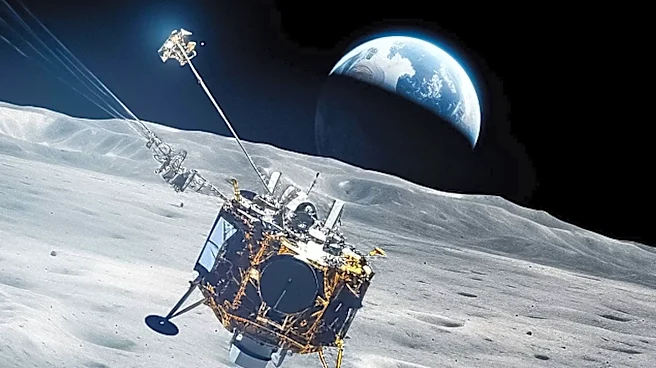
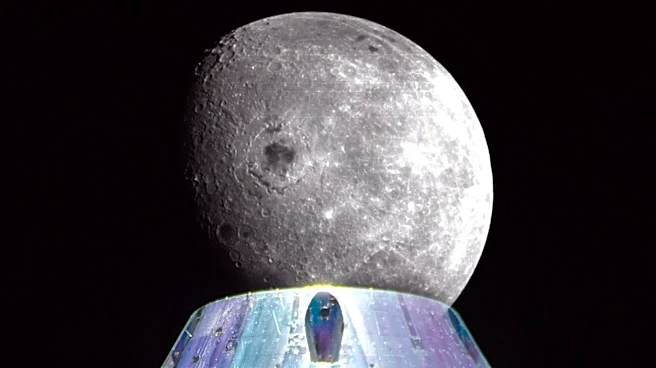
NASA has announced the CAPSTONE 02 mission, a new small spacecraft technology demonstration aimed at advancing lunar exploration capabilities. Scheduled for launch in 2027, the mission will involve two small spacecraft in lunar orbit to demonstrate technologies
critical for future NASA lunar and deep space missions. These include rendezvous and proximity operations, autonomous navigation, and cislunar communication capabilities. The mission builds on the success of the original CAPSTONE mission, which validated key technologies in a near rectilinear halo orbit around the Moon. CAPSTONE 02 will further mature these technologies, supporting NASA's Artemis program and the development of a sustainable lunar presence.
Why It's Important?
The CAPSTONE 02 mission is a pivotal step in NASA's efforts to establish a permanent human presence on the Moon and support future deep space exploration. By demonstrating advanced navigation and communication technologies, the mission will provide critical data and operational experience needed for the safe and efficient transport of astronauts and equipment to and from the lunar surface. This mission also represents a significant collaboration between NASA and industry partners, highlighting the importance of public-private partnerships in advancing space exploration. The technologies tested in CAPSTONE 02 could pave the way for more cost-effective and reliable lunar missions, ultimately contributing to the broader goals of the Artemis program.
What's Next?
Following the CAPSTONE 02 mission, NASA will likely continue to refine and expand its lunar exploration technologies, incorporating lessons learned into future missions. The success of CAPSTONE 02 could lead to the development of more sophisticated lunar infrastructure, including communication networks and navigation systems, essential for long-term human habitation on the Moon. Additionally, the mission's outcomes may influence the design and planning of subsequent Artemis missions, as well as commercial lunar ventures. As NASA progresses towards its goal of a sustainable lunar presence, further collaborations with industry and international partners are expected to play a crucial role.