


What's Happening?
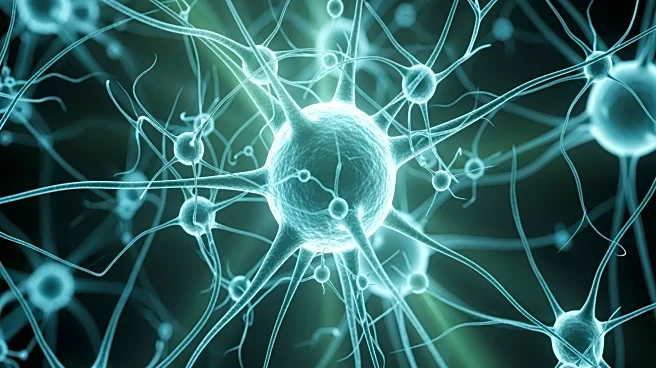
Recent research has highlighted the significant role of neural crest cells in embryonic development and their potential link to various diseases. These stem cells are crucial in forming the pigments of the eyes and skin, as well as the bone structure
of the face. They also contribute to the development of the peripheral nervous system and the enteric nervous system, often referred to as the 'second brain.' A study published in Nature Communications has shown that endothelin 3, a peptide, plays a critical role in the migration of these cells during embryogenesis. Defects in this process can lead to conditions such as Hirschsprung disease, which affects the colon's nervous system and can be lethal if not treated surgically at birth. The study also suggests that the electrical activity of neural crest cells, influenced by endothelin 3, is essential for their motility and successful colonization of the gut.
Why It's Important?
Understanding the function and migration of neural crest cells is vital for diagnosing and treating neurocristopathies, a group of disorders resulting from defective neural crest migration. The research provides insights into the mechanisms that could be targeted for therapeutic interventions in conditions like Hirschsprung disease. Additionally, the findings have implications for cancer research, as the reactivation of neural crest cell programs is linked to the invasiveness of certain tumors, such as melanoma and glioblastoma. This could lead to new strategies for preventing metastasis and developing cancer treatments.
What's Next?
Future research will likely focus on further elucidating the pathways and mechanisms by which endothelin 3 and other factors influence neural crest cell behavior. This could involve exploring potential genetic therapies or drugs that can modulate these pathways to prevent or treat related diseases. Additionally, the study's findings may prompt further investigation into the role of neural crest cells in other developmental disorders and cancers, potentially leading to broader applications in medical research and treatment.
Beyond the Headlines
The study of neural crest cells not only advances our understanding of embryonic development but also raises questions about the broader implications of cellular 'moonlighting,' where proteins like endothelin 3 have multiple roles. This concept could lead to a reevaluation of how we understand protein functions in biology and medicine, potentially uncovering new therapeutic targets across various fields.