



What's Happening?
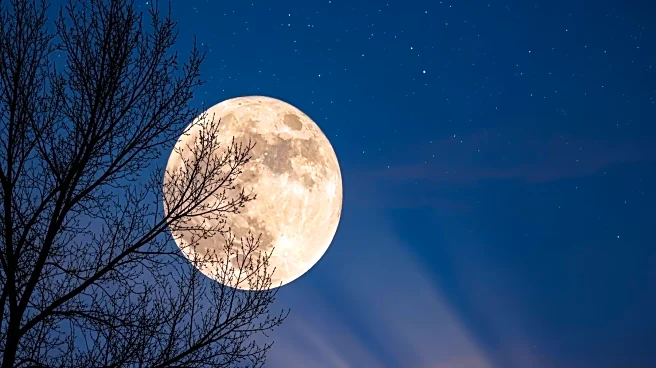
The Buck Moon, the full moon of July 2025, is set to reach its peak illumination at 9:37 pm BST (4:37 pm EDT). This celestial event is notable for being one of the most distant full moons of the year, appearing slightly smaller in the sky. It coincides
with a major lunar standstill, where the Moon's path is unusually low, enhancing the 'Moon illusion' effect, making it appear larger when near the horizon. Traditionally, this full moon is also known as the Thunder Moon in North America, due to the prevalence of summer storms, and the Hungry Ghost Moon in China. For optimal viewing, experts suggest finding a location with minimal light pollution and an unobstructed view of the eastern horizon, as the Moon's rise is often visually striking with a golden or orange hue.
Why It's Important?
The Buck Moon offers a unique opportunity for sky gazers and astronomy enthusiasts to witness a rare celestial event. The occurrence of a major lunar standstill amplifies the Moon illusion, providing a visually captivating experience. This event also highlights the cultural significance of lunar cycles, as different regions have their own folklore and names associated with the full moon. The Buck Moon's appearance serves as a reminder of the interconnectedness of natural phenomena and cultural traditions, fostering a sense of global unity through shared experiences of the night sky.
What's Next?
As the Buck Moon remains bright for a day before and after its peak, observers have multiple opportunities to view it, even if weather conditions are not ideal on the peak night. The UK Met Office forecasts clear skies on Friday evening, providing an excellent chance for viewing. This event may inspire increased interest in astronomy and cultural studies, as people explore the stories and science behind lunar phenomena. Additionally, the Buck Moon could lead to discussions on the impact of light pollution on astronomical observations and the importance of preserving dark skies.