



What's Happening?
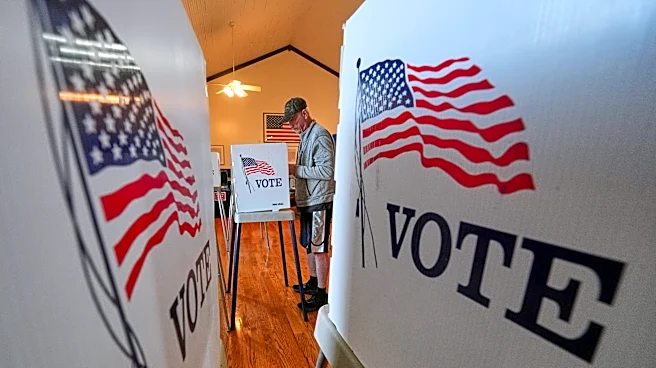
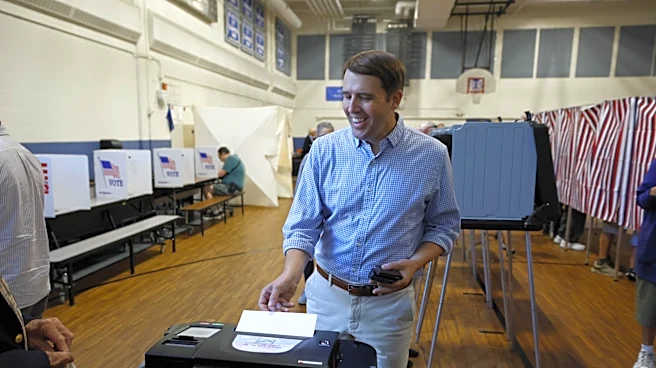
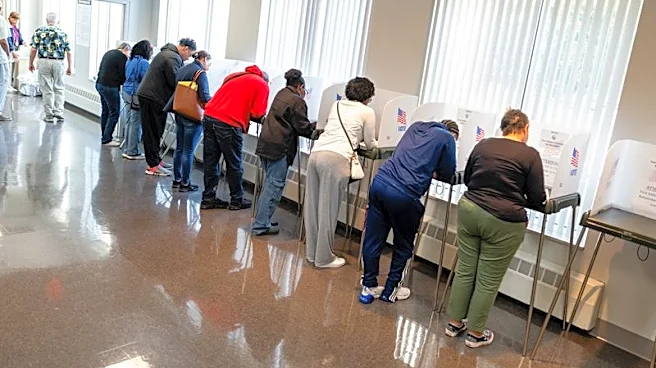
Bangor, Maine, experienced a significant voter turnout as polls opened at 7 a.m. on Tuesday for local elections. Voters are casting ballots for a new city council, with twelve candidates vying for positions, marking the highest number in years. Additionally,
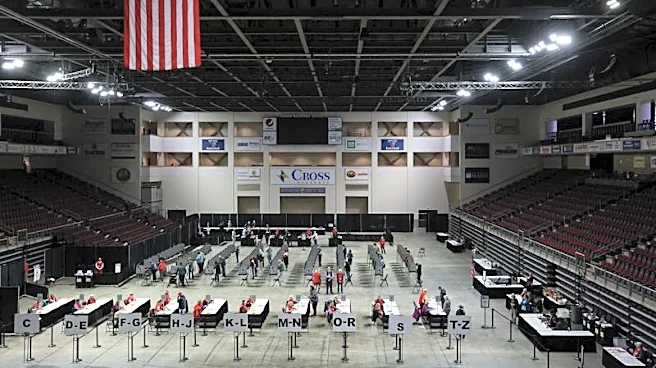
residents are deciding on a school committee race and a referendum question concerning the construction of a new Penobscot County jail outside of Bangor. The city clerk advised unregistered voters to bring proof of ID and residency, while registered voters could proceed directly to the arena floor. Voters with absentee ballots were reminded to return them to their town or city clerk by 8 p.m. on Tuesday, the closing time for polls.
Why It's Important?
The high voter turnout in Bangor's local elections underscores active civic engagement within the community, particularly given the multiple significant issues on the ballot. The large number of candidates for the city council suggests a competitive political landscape and potentially diverse perspectives on local governance. The school committee race is crucial for shaping the future of education in Bangor, directly impacting students, parents, and educators. Furthermore, the referendum on a new Penobscot County jail carries substantial implications for public safety, county finances, and land use, affecting taxpayers and residents across the county. The outcomes of these elections will directly influence local policies, resource allocation, and the overall direction of Bangor and Penobscot County for the foreseeable future.
What's Next?
As polls have closed, the immediate next step is the tabulation of votes for the city council, school committee, and the Penobscot County jail referendum. The results will determine the composition of Bangor's local government and the fate of the proposed jail project. Newly elected city council and school committee members will assume their roles, beginning the process of addressing community needs and implementing their platforms. The outcome of the jail referendum will dictate whether Penobscot County proceeds with plans for a new facility, which would involve significant planning, funding, and construction phases. The high turnout suggests that the community is invested in these decisions, and the results will likely be closely watched by residents and local stakeholders.
Beyond the Headlines
The robust participation in Bangor's local elections reflects a broader trend of increased engagement in municipal politics, often driven by issues that directly affect daily life, such as education, public safety, and local development. The referendum on the county jail highlights the complex balance between public safety needs, fiscal responsibility, and community impact, a challenge many U.S. localities face. The competitive city council race, with a high number of candidates, could indicate a desire for fresh perspectives or a response to specific local challenges. This level of local engagement is vital for democratic health, ensuring that governance remains responsive to the needs and priorities of its citizens, and can serve as a microcosm for understanding broader political dynamics at the state and national levels.