


What's Happening?
President Trump has announced the deployment of U.S. Immigration and Customs Enforcement (ICE) agents to major U.S. airports to assist the Transportation Security Administration (TSA) amid ongoing congestion. This decision comes as TSA workers continue
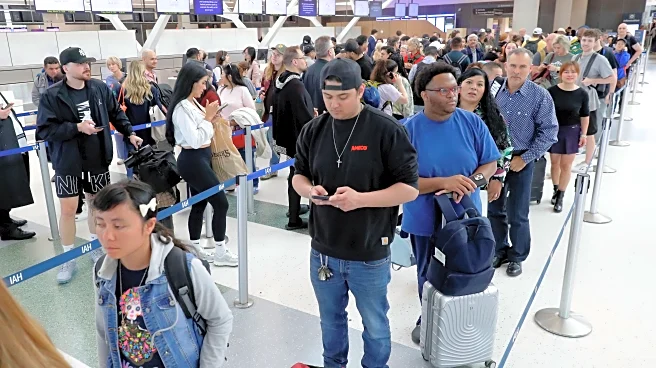
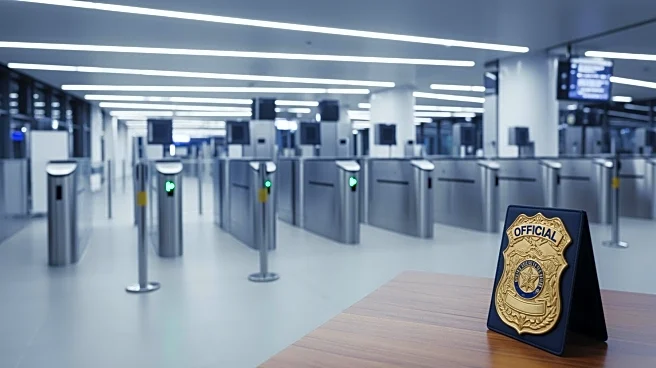
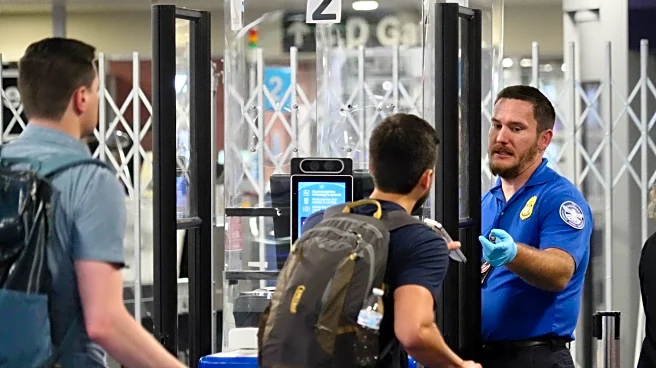
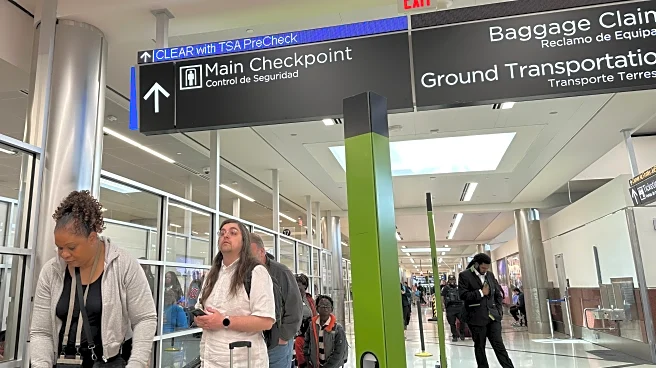
to operate without pay due to a budget impasse that has left the Department of Homeland Security (DHS) unfunded. Videos circulating on social media show long lines at airports such as Louis Armstrong New Orleans International Airport and Hartsfield-Jackson Atlanta International Airport, with wait times reaching up to 153 minutes. ICE agents will be tasked with roles such as monitoring exit lanes and checking identification to alleviate pressure on TSA officers. The deployment plan is being finalized, with a focus on airports experiencing significant delays.
Why It's Important?
The deployment of ICE agents to assist TSA is a significant move in response to the partial government shutdown affecting DHS funding. This action aims to mitigate the impact on air travel, which has become a political issue amid the shutdown. The decision highlights the administration's approach to handling security and operational challenges at airports, potentially affecting millions of travelers. It also underscores the ongoing political standoff between Democrats and Republicans over immigration enforcement and DHS funding. The involvement of ICE in airport operations may raise concerns about the agency's role and training in such environments, impacting public perception and political discourse.
What's Next?
The confirmation vote for Senator Markwayne Mullin as the next DHS secretary is expected soon, which could influence the direction of DHS policies and funding negotiations. Bipartisan talks in the Senate are ongoing to resolve the funding impasse, but no agreement appears imminent. The deployment plan for ICE agents is being finalized, with specific airports and roles to be determined. The situation may prompt further political debate and negotiations, potentially affecting future DHS operations and funding strategies.