







What's Happening?
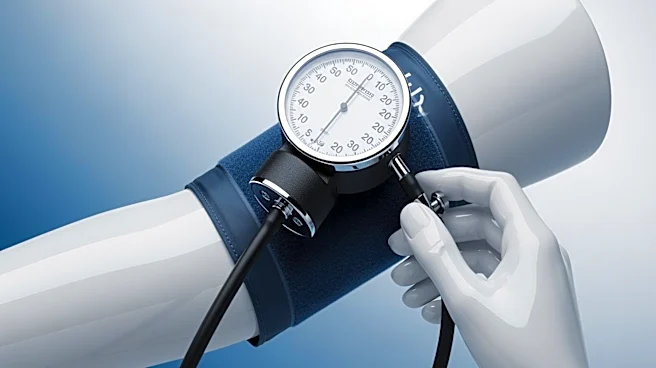
A recent study conducted by scientists at Johns Hopkins University has highlighted the significant impact of arm positioning on blood pressure readings. The research, published in JAMA Internal Medicine, found that even minor deviations in arm position during
blood pressure measurement can lead to significant differences in readings. The study involved 133 participants aged 18 to 80, who were subjected to blood pressure measurements in various arm positions, including desk-supported, lap-rest, and side-dangling. Results showed that an unsupported arm could result in readings up to 6.5 mmHg higher than when the arm is properly supported. This discrepancy can lead to misdiagnosis, potentially categorizing a patient’s blood pressure as 'stage 2' hypertension when it might not be. The study emphasizes the importance of proper arm support to ensure accurate blood pressure readings, which are crucial for determining appropriate medical treatment.
Why It's Important?
The findings of this study are significant as they underscore the potential for misdiagnosis in hypertension, a condition affecting nearly half of U.S. adults. Inaccurate blood pressure readings can lead to unnecessary prescriptions, increased healthcare costs, and potential side effects from unwarranted medication. Conversely, underestimating blood pressure can delay necessary treatment, increasing the risk of heart attacks and strokes. The study calls attention to the need for healthcare providers to adhere to proper measurement techniques, which could prevent thousands of incorrect diagnoses annually. This research also highlights the importance of patient education regarding at-home blood pressure monitoring, as improper technique can similarly lead to inaccurate readings.
What's Next?
The research team at Johns Hopkins plans to explore interventions that could improve measurement accuracy in clinical settings. This includes testing reminders on blood pressure devices to prompt correct arm positioning and evaluating wrist cuffs with built-in position sensors. These measures aim to reduce the incidence of misdiagnosis and improve patient outcomes. Additionally, public health specialists advocate for standardizing blood pressure measurement practices to minimize errors and enhance cardiovascular safety. The study’s findings may prompt healthcare facilities to review and update their protocols, ensuring that staff are trained to follow best practices consistently.