

What's Happening?
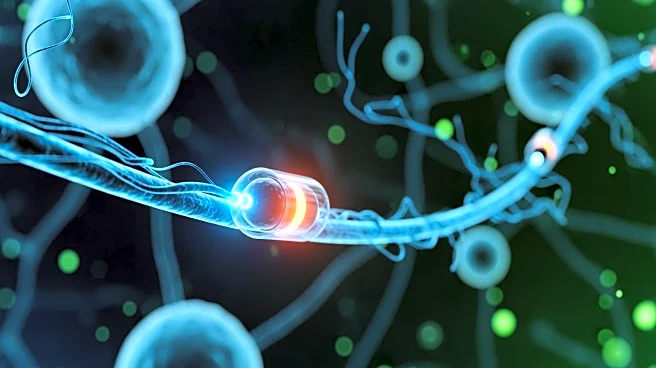
Researchers at Pompeu Fabra University have unveiled a new nanomachine, termed a 'nanocourier,' that plays a crucial role in constitutive exocytosis, a process vital for cell communication and growth. This discovery, made using advanced microscopy and artificial
intelligence, provides unprecedented insights into how cells transport molecular packages to their surfaces. The research, published in the journal Cell, highlights the nanocourier's role in maintaining cellular functions and its potential implications for treating infections and rare diseases. The study emphasizes the nanocourier's importance in various biological processes, including pathogen defense and cellular repair.
Why It's Important?
Understanding the nanocourier's function could revolutionize medical research by offering new approaches to treating diseases that involve cellular transport mechanisms. The discovery has implications for developing therapies for infections caused by pathogens like SARS-CoV-2 and HIV, which exploit exocytosis. Additionally, the research could inform agricultural practices by enhancing plant defenses against microbial invasions. The study's findings may also contribute to advancements in biotechnology, particularly in areas requiring precise molecular delivery systems. This breakthrough underscores the potential of integrating imaging technologies with AI to explore complex biological processes.
Beyond the Headlines
The nanocourier's discovery highlights the intersection of biology and technology, showcasing how AI can enhance scientific understanding. This research may pave the way for future innovations in drug delivery systems and genetic engineering. The study also raises ethical considerations regarding the manipulation of cellular processes and the potential for unintended consequences. As research progresses, it will be crucial to balance scientific advancement with ethical responsibility, ensuring that new technologies are developed and applied safely and effectively.