



What's Happening?
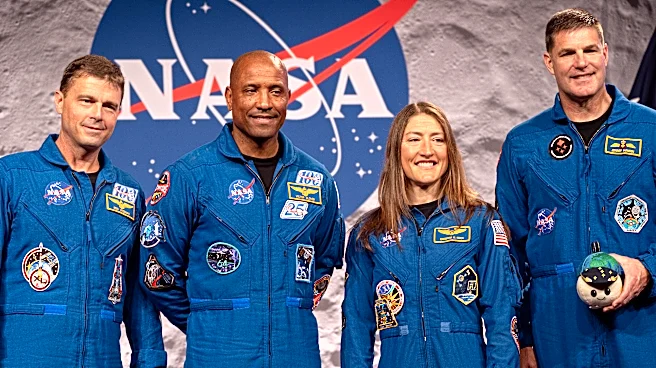
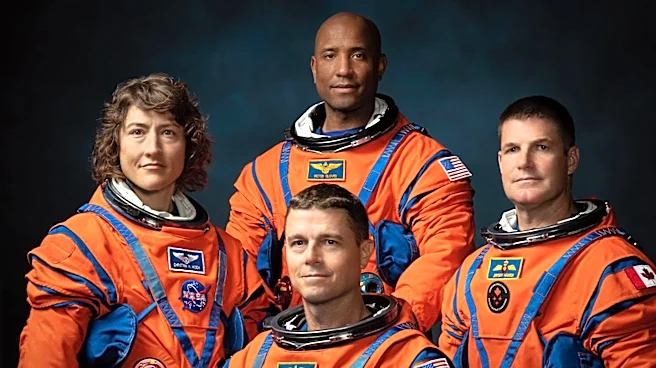
The Smithsonian’s National Air and Space Museum has announced its recipients for the 2027 Michael Collins Trophy. Charles Duke will receive the Lifetime Achievement award, while the Artemis II Mission Team will be honored for Current Achievement. The awards
ceremony is scheduled for Thursday, March 25, 2027, at the museum’s Washington, D.C. building. Established in 1985, the Michael Collins Trophy recognizes significant contributions to aerospace science, technology, and their historical context. The trophy is named after Apollo 11 astronaut Michael Collins, acknowledging his aerospace contributions and his service as the museum's director. Recipients receive a miniature replica of 'The Web of Space' sculpture by John Safer. Chris Browne, the John and Adrienne Mars Director of the museum, stated that both General Duke and the Artemis II team embody the excellence of the American space program.
Why It's Important?
This recognition highlights the enduring legacy of U.S. space exploration and its continuous evolution. Charles Duke, as the 10th and youngest person to walk on the moon during Apollo 16, represents a pivotal era of lunar exploration. His work advanced lunar science and operational techniques that continue to inform current missions. The Artemis II Mission Team's award underscores the U.S.'s renewed commitment to deep space exploration, marking the first crewed mission beyond low Earth orbit in over 50 years. This mission not only pushed the boundaries of human travel but also set the stage for future lunar landings and potential human exploration of Mars. The awards celebrate both historical achievements and the ongoing advancements that inspire national pride and international collaboration in space.
What's Next?
The awards ceremony for the 2027 Michael Collins Trophy will take place on March 25, 2027, in Washington, D.C. This event will likely draw significant attention to the achievements of Charles Duke and the Artemis II Mission Team, further promoting public engagement in space exploration. The Artemis II mission has already laid crucial groundwork for future deep space endeavors, including the planned Artemis IV mission, which aims for a lunar landing, and the establishment of an extended human presence on the moon. These ongoing efforts are part of a broader strategy to prepare for eventual human missions to Mars, indicating a sustained focus on ambitious space exploration goals by NASA and its international partners.
Beyond the Headlines
The recognition of both a veteran Apollo astronaut and a contemporary Artemis team signifies a generational bridge in U.S. space exploration. It emphasizes the continuity of scientific inquiry and human endeavor across different eras of spaceflight. The Artemis II mission, with its diverse crew including the first African American on a lunar mission and the first woman to travel beyond low Earth orbit, also highlights evolving inclusivity in space exploration. This shift from a 'space race' mentality to a model of international collaboration, as noted by the museum director, reflects a broader change in global scientific partnerships. The awards serve not just as a celebration of past and present achievements but also as a powerful narrative for inspiring future generations in STEM fields and fostering a collective human ambition for discovery.