
What's Happening?
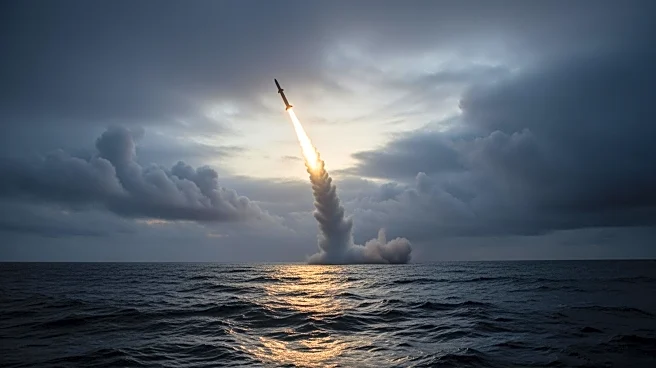
North Korea has launched short-range ballistic missiles into the sea between the Korean Peninsula and Japan, escalating tensions with South Korea. The launches, detected by South Korea's military, involved
missiles traveling approximately 350 kilometers. Japan's Defense Ministry condemned the action as a threat to regional peace. This marks North Korea's first missile test since early January and follows a series of weapons tests aimed at expanding its nuclear and missile capabilities. The launches come ahead of North Korea's ruling Workers' Party congress, a significant political event where new priorities are set. The North's actions are seen as a demonstration of its military advancements and a strategic move to gain leverage in stalled negotiations with the U.S. and South Korea.
Why It's Important?
The missile launches highlight ongoing security challenges in the Korean Peninsula and the broader region. North Korea's continued weapons development poses a threat to regional stability and complicates diplomatic efforts to denuclearize the peninsula. The timing of the launches, ahead of a major political meeting, suggests a strategic intent to showcase military strength and influence future negotiations. This development could impact U.S. foreign policy and military strategies in the region, as well as relations between North Korea and its neighbors. The international community's response to these provocations will be crucial in determining the next steps in addressing North Korea's military ambitions.
What's Next?
The upcoming Workers' Party congress in North Korea is expected to outline new political and economic priorities, potentially influencing future military actions. The international community, including the U.S., South Korea, and Japan, will likely increase diplomatic and military readiness in response to North Korea's provocations. Further missile tests or military demonstrations by North Korea could escalate tensions and prompt additional sanctions or diplomatic efforts to curb its weapons program. The situation remains fluid, with potential implications for regional security and international relations.