

What's Happening?
The recent military actions by the United States and Israel against Iran have led to significant disruptions in commercial flight operations across the Middle East and beyond. As a result of these strikes, several countries, including Israel, Qatar, Syria,
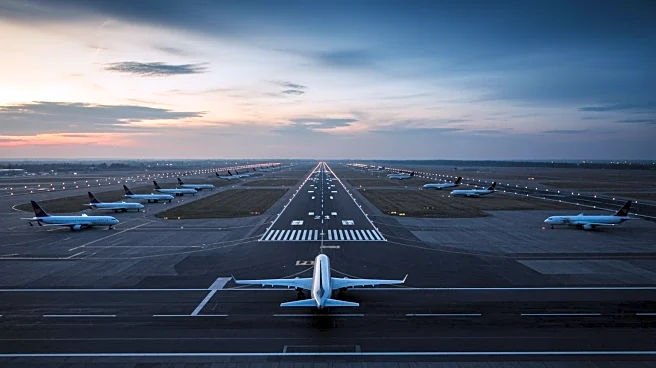
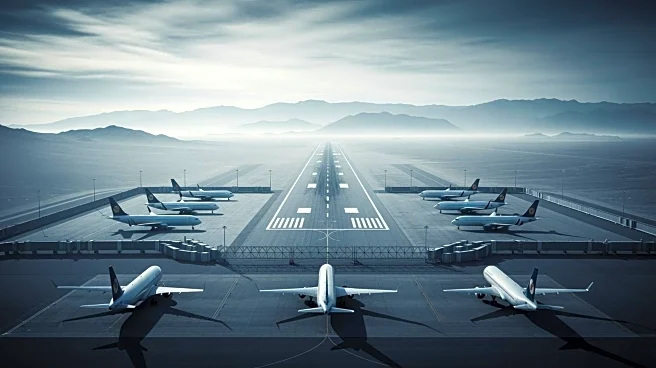
Iran, Iraq, Kuwait, and Bahrain, have closed their airspace. Additionally, Oman’s Muscat International Airport has shut down, and flights over the United Arab Emirates have been restricted. Major airlines in the region, such as Emirates, Qatar Airways, and Etihad Airways, have canceled hundreds of flights, leaving tens of thousands of travelers stranded. The situation remains fluid, with airlines advising passengers to check their flight status online before heading to airports. The disruptions have also affected flights to and from Europe, with many being diverted or canceled.
Why It's Important?
The closure of airspace and the cancellation of flights have significant implications for global travel and the aviation industry. The Middle East is a critical hub for international air travel, and disruptions in this region can have ripple effects worldwide. Airlines are facing logistical challenges in rerouting flights and accommodating stranded passengers, which could lead to financial losses. Travelers are experiencing uncertainty and inconvenience, with many having to alter their travel plans. The situation underscores the vulnerability of global travel networks to geopolitical tensions and conflicts. The aviation industry, already recovering from the impacts of the COVID-19 pandemic, faces additional strain from these disruptions.
What's Next?
The duration of the airspace closures and flight cancellations remains uncertain, as the situation is evolving. Airlines are issuing waivers to affected travelers, allowing them to rebook without additional fees. However, the ongoing conflict could lead to further cancellations and delays. Airlines and passengers alike will need to remain flexible and prepared for changes. The aviation industry will closely monitor the situation, and further decisions will depend on the developments in the geopolitical landscape. Travelers are advised to stay informed and consider alternative routes or modes of transportation if necessary.