



What's Happening?
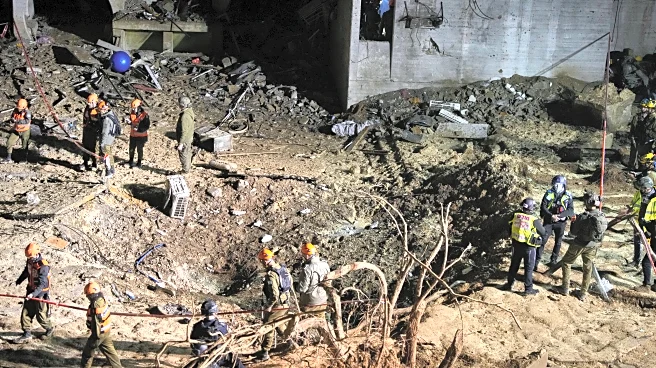
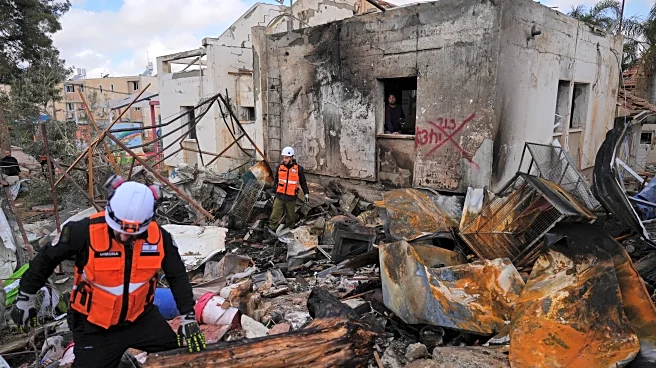
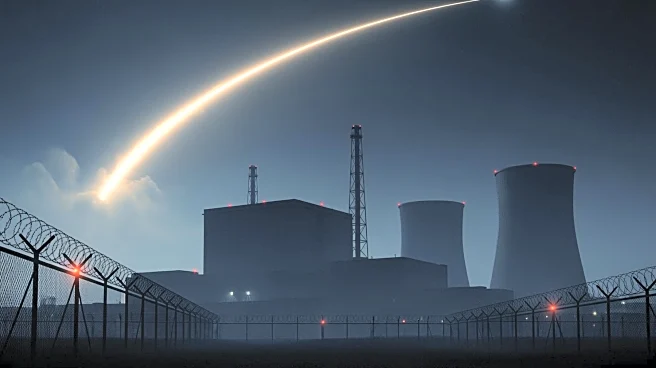
Iranian missiles recently struck two communities in southern Israel, causing significant damage and injuring dozens. The attacks occurred near Israel's main nuclear research center, marking the first time Iranian missiles have penetrated Israeli air defense
systems in this area. The strikes followed an earlier attack on Iran's Natanz nuclear enrichment facility, for which Israel denied responsibility. The Israeli Ministry of Health reported that at least 180 people were wounded in the missile attacks on the cities of Dimona and Arad. Dimona is located approximately 20 kilometers west of the nuclear research center, while Arad is about 35 kilometers to the north. Despite the severity of the attacks, the UN nuclear watchdog has not reported any damage to the Israeli nuclear center or abnormal radiation levels.
Why It's Important?
The missile strikes highlight the escalating tensions between Iran and Israel, particularly concerning nuclear capabilities and regional security. The ability of Iranian missiles to penetrate Israeli air defenses near a critical nuclear site raises significant concerns about the security of nuclear installations in the region. This development could potentially destabilize the Middle East further, as both nations have a history of military confrontations. The international community is closely monitoring the situation, emphasizing the need to prevent further escalation and maintain regional stability. The incident underscores the ongoing geopolitical struggle over nuclear capabilities and the potential for catastrophic consequences if such tensions are not managed effectively.
What's Next?
The immediate focus will likely be on diplomatic efforts to de-escalate tensions between Iran and Israel. International stakeholders, including the United Nations and major world powers, may increase pressure on both countries to engage in dialogue and avoid further military confrontations. Additionally, Israel may seek to enhance its air defense systems to prevent future breaches, while Iran might continue to assert its military capabilities in response to perceived threats. The situation remains fluid, and any further developments could significantly impact regional and global security dynamics.
Beyond the Headlines
The recent missile strikes could have long-term implications for nuclear non-proliferation efforts in the Middle East. As the only nation in the region believed to possess nuclear weapons, Israel's security measures and military responses are closely scrutinized. The incident may prompt renewed discussions on nuclear disarmament and the need for comprehensive security frameworks to prevent similar occurrences. Furthermore, the attacks could influence public opinion and policy decisions within Israel and Iran, potentially affecting future elections and government strategies.