



What's Happening?
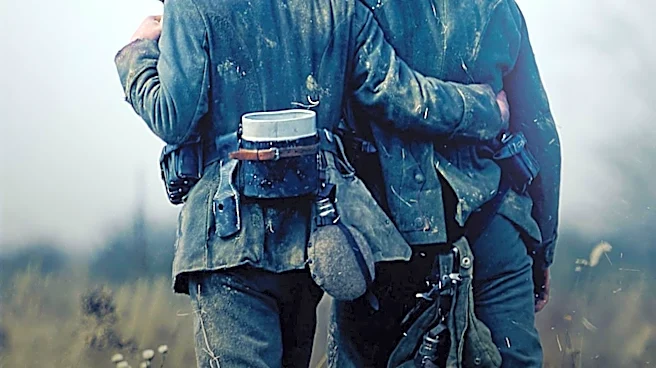
The Meuse-Argonne Offensive, launched in late September 1918, represented the largest operation ever attempted by the United States military at that time. American 'doughboys' faced a formidable German defense entrenched in the Argonne Forest, a landscape
characterized by ravines, shattered trees, and machine-gun nests. The offensive began with a massive artillery barrage, followed by infantry advances into heavily fortified German positions. Despite initial gains, the American forces encountered fierce resistance, leading to slow and costly progress. Units often lost contact in the dense terrain, and communication lines were frequently severed. The offensive aimed to break through German supply lines, particularly the rail network leading to Sedan, which was crucial for sustaining German divisions on the Western Front. The American First Army, under General John J. Pershing, was tasked with this decisive push, which was intended to be the final major drive of World War I.
Why It's Important?
The Meuse-Argonne Offensive was a pivotal moment in World War I, demonstrating the significant impact of American manpower and industrial capacity on the global stage. Its success was crucial for the Allied war effort, as a failure could have prolonged the conflict into 1919, potentially allowing Germany to negotiate a more favorable peace. The offensive tested the capabilities of the newly formed American First Army, which had to integrate divisions with varying levels of combat experience into a complex and challenging battleground. The lessons learned from the Meuse-Argonne, particularly regarding logistics, staff work, and the coordination of artillery and infantry in difficult terrain, profoundly influenced U.S. military doctrine for decades. Many officers who served in this campaign later applied these experiences in World War II, shaping future strategies and tactics. The offensive ultimately contributed to the collapse of German resistance and the signing of the armistice, solidifying the United States' role as a major global power.
What's Next?
The immediate consequence of the Meuse-Argonne Offensive was the accelerated collapse of German resistance. As American forces pressed deeper into German lines, threatening vital supply routes, the German high command faced increasing pressure. Combined with internal unrest and dwindling resources, the military setbacks in the Argonne contributed to Germany's decision to seek an armistice. The offensive's conclusion directly led to the cessation of hostilities on November 11, 1918. In the long term, the experience of the Meuse-Argonne would continue to be studied by military strategists. Future generations of U.S. military leaders would analyze the campaign's successes and failures to refine training, logistics, and combined arms tactics. The region itself would become a historical site for staff rides and educational exercises, ensuring that the lessons of this grueling offensive continued to inform military planning.
Beyond the Headlines
The Meuse-Argonne Offensive highlighted the immense human cost of modern warfare, with both sides suffering heavy casualties in the brutal fighting. Beyond the strategic objectives, the campaign underscored the psychological toll on soldiers, who fought in a maze-like forest under constant fire, often isolated from their units. The 'Lost Battalion' incident, where American troops were surrounded and held out for days, became a symbol of the individual bravery and resilience displayed during the offensive. The campaign also revealed the challenges of integrating a large, relatively inexperienced army into a complex, multi-national war effort. The ethical implications of such a high-stakes, high-casualty offensive, undertaken to force an end to the war, continue to be debated by historians. Culturally, the 'doughboy' image became iconic, representing the American spirit and sacrifice in World War I, and the Argonne Forest remains a poignant reminder of this pivotal chapter in U.S. military history.