






What's Happening?
Delaware Public Advocate Jameson Tweedie has formally requested state energy regulators to investigate the profit models of all private utilities in the state, specifically criticizing Delmarva Power. Tweedie argues that new research indicates utilities nationwide
earn more profit than necessary, suggesting customers may be overpaying for essential services like electricity, water, sewer, and gas. This request follows Governor Matt Meyer's call for such an investigation after significant consumer outrage over high power bills, particularly from Delmarva Power customers. Delmarva Power is currently seeking a $67.8 million revenue increase, which would be the largest utility increase in Delaware's history, potentially raising average homeowner bills by about 4%. While Delmarva Power welcomes a review, its regional president, Marcus Beal, maintains that the current regulated profit structure is crucial for the company's financial health.
Why It's Important?
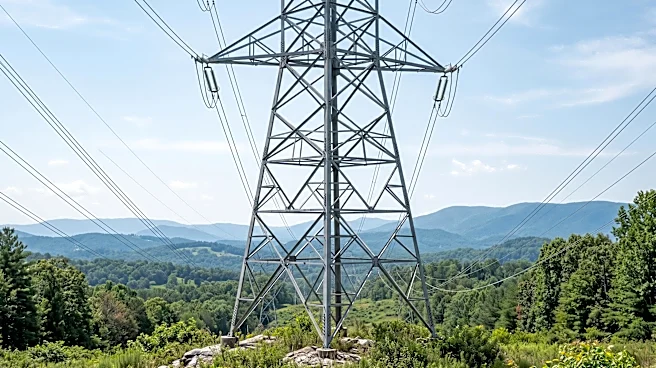
This inquiry is significant for Delaware residents as it directly addresses the affordability of essential utility services. If regulators agree to lower the allowable profit for utilities, it could lead to reduced power bills for consumers. However, it also raises concerns about the financial stability of utility companies and their ability to attract investment for necessary infrastructure upgrades. The debate highlights the inherent tension in regulated monopolies: ensuring utilities can maintain and improve infrastructure while preventing them from overcharging customers. The outcome of this investigation could set a precedent for how utility profits are regulated in Delaware and potentially influence similar discussions in other states facing rising energy costs. The increased demand from data centers and the PJM grid's inability to keep up with new power plant development are also contributing factors to higher electricity prices, which utilities do not profit from directly but impact overall consumer costs.
What's Next?
The Delaware Public Service Commission (PSC) is scheduled to discuss Tweedie's request for an investigation at its upcoming meeting. This discussion will determine whether a formal inquiry into utility profit models will proceed. If an investigation is launched, it could lead to regulatory changes in the allowable return on equity for utilities, potentially impacting Delmarva Power's proposed rate increase. Tweedie has suggested reforms such as setting the return on equity to be equal to the return on U.S. Treasuries plus 2%. Delmarva Power and the Public Advocate also agree on the potential benefit of funding infrastructure upgrades proactively rather than reactively to help manage costs. The outcome will likely influence future rate-setting processes and the financial landscape for regulated utilities in Delaware.
Beyond the Headlines
The core issue extends beyond just Delmarva Power's profits; it touches upon the fundamental structure of regulated utilities in the U.S. Regulated utilities are typically allowed to recoup infrastructure costs and earn a profit, often up to a 10% return on equity. Tweedie argues that this return is higher than the average equity investment in the stock market and may not be necessary for a regulated monopoly like Delmarva Power, which is considered a safe investment. This situation raises questions about whether the current regulatory framework adequately protects consumers in an environment of increasing energy demand and infrastructure needs. The discussion could lead to a broader re-evaluation of how utility profits are determined and whether the current system truly serves the public interest, especially when customers are facing economic pressures from various sources.