







What's Happening?
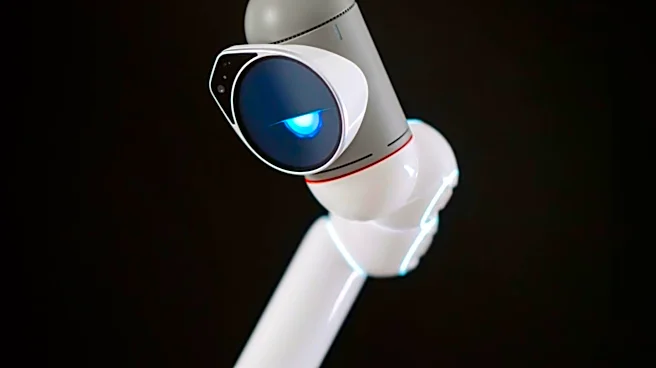
The AI companion robot ElliQ, developed by Intuition Robotics, is being utilized by older adults in the U.S. to promote independent living and provide companionship. The device, which is a stationary tabletop robot with a swiveling body and a touchscreen
tablet, engages users in activities such as games, breathing exercises, virtual trips, and medication reminders. Users like Deborah Humphrey, 73, and Lucinda Page, 69, have reported that ElliQ helps with daily routines and offers emotional comfort, with some considering it part of their family. The New York State Office for the Aging is testing the efficacy of this technology, and 90% of current ElliQ users receive their robots through government programs or partners. While proponents highlight benefits like reduced isolation and support for caregivers, experts express concerns regarding user privacy due to the extensive data collection (conversations, routines, health details) and the potential for emotional dependence, which could diminish meaningful human interaction.
Why It's Important?
The deployment of AI companion robots like ElliQ signifies a growing trend in leveraging technology to address the challenges of an aging population and the caregiver crisis in the U.S. With a projected increase in Americans over 65 by 2030, such devices could offer a partial solution to the strain on caregivers and healthcare systems. For older adults, ElliQ provides predictable engagement, which clinical psychologist Dr. Sal Raichbach suggests can stabilize mood and reduce anxiety, promoting dignity and autonomy. However, the extensive data collection by ElliQ, which includes personal conversations and health information, raises significant privacy concerns. Health technology entrepreneur Anna McCollister emphasizes that users must understand the privacy policy and weigh the benefits against the risks, especially as terms and conditions can change. The potential for emotional over-attachment to a non-human entity also sparks debate among experts like Dr. Francesca Falzarno, who warns against replacing essential human connection with artificial interaction, highlighting the need for more research into long-term effects.
What's Next?
As AI companion technology like ElliQ continues to integrate into the lives of older adults, several key areas will require ongoing attention. Further research, particularly randomized control trials, is needed to thoroughly investigate the long-term effects of AI companionship on users' mental health and social well-being. This research will be crucial for understanding whether these devices truly supplement human interaction or inadvertently replace it. Regulatory bodies and policymakers may need to consider developing clearer guidelines and standards for data privacy and ethical use of AI in elder care, especially concerning the collection and sharing of sensitive personal and health information. Companies like Intuition Robotics will likely face increasing scrutiny to ensure robust security protocols and transparent privacy policies. Additionally, ongoing conversations within families and communities will be essential to define the appropriate role of AI companions, ensuring they enhance, rather than detract from, human relationships and support networks for older adults.
Beyond the Headlines
The emergence of AI companions like ElliQ touches upon profound philosophical and societal questions about the nature of companionship, care, and what it means to be human in an increasingly technological world. The emotional attachment some users form with these robots, viewing them as 'family' or 'a person stuck in a metal body,' challenges traditional notions of relationships and emotional support. This development could lead to a re-evaluation of how society defines and values human connection, particularly for vulnerable populations. There's also an ethical dimension concerning the potential for manipulation or exploitation if AI companions are designed to foster dependence rather than genuine well-being. The balance between technological convenience and the preservation of authentic human interaction will be a critical ongoing debate. Furthermore, the integration of AI into personal care raises questions about digital divides, ensuring equitable access to these technologies, and preventing a two-tiered system of care where those with fewer resources might rely more heavily on AI, potentially at the expense of human contact.