








What's Happening?
NASA has initiated funding for the 'Skyfall' Mars helicopter mission, selecting Firefly Aerospace to design and manufacture the protective aeroshell for the spacecraft. This mission, managed by NASA's Jet Propulsion Laboratory, is set to launch in 2028
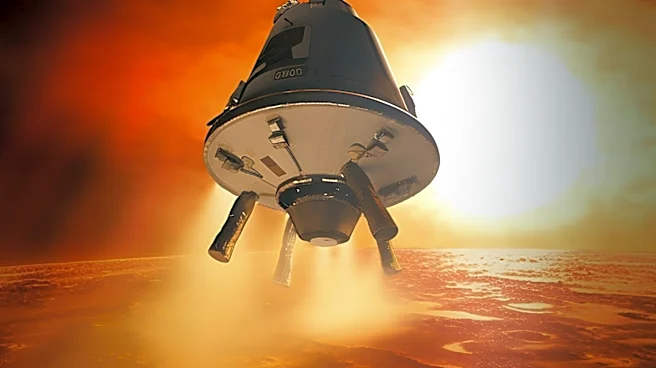
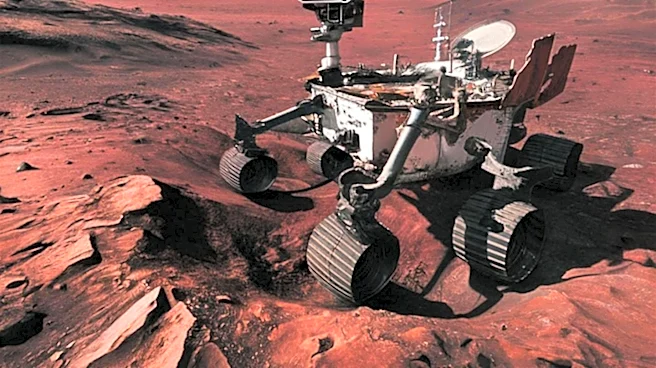
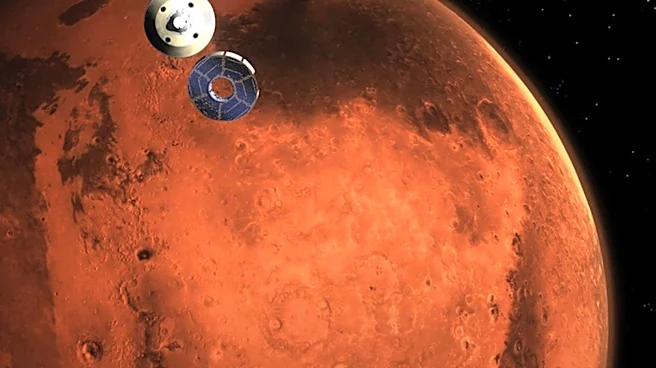
and will be NASA's first nuclear-powered interplanetary probe. The mission will include three helicopters similar to the Ingenuity drone, which previously landed on Mars with the Perseverance rover. Firefly Aerospace has been awarded a $13 million subcontract to develop the aeroshell, which will include a heatshield and backshell to protect the spacecraft during its descent through the Martian atmosphere. The mission aims to demonstrate the helicopters' onboard prospecting instruments, which will scout for water ice on Mars' surface to identify potential landing sites for future crewed missions.
Why It's Important?
The 'Skyfall' mission represents a significant advancement in NASA's exploration of Mars, utilizing nuclear power for the first time in an interplanetary probe. This development could pave the way for more efficient and longer-lasting missions to Mars and beyond. The use of helicopters to map resources on Mars is a novel approach that could provide critical data for future human exploration. The collaboration with Firefly Aerospace also highlights the growing role of private companies in space exploration, potentially reducing costs and accelerating timelines for future missions. This mission could have far-reaching implications for the U.S. space industry, enhancing technological capabilities and maintaining leadership in space exploration.
What's Next?
Following the development of the aeroshell at Firefly's Gloworks facility in Texas, the components will be manufactured and tested at the company's Rocket Ranch before being integrated into the spacecraft at JPL. The mission's success could influence future NASA projects and collaborations with private aerospace companies. The data collected by the helicopters could inform the planning of crewed missions to Mars, potentially leading to human exploration of the planet within the next decade.