


What's Happening?
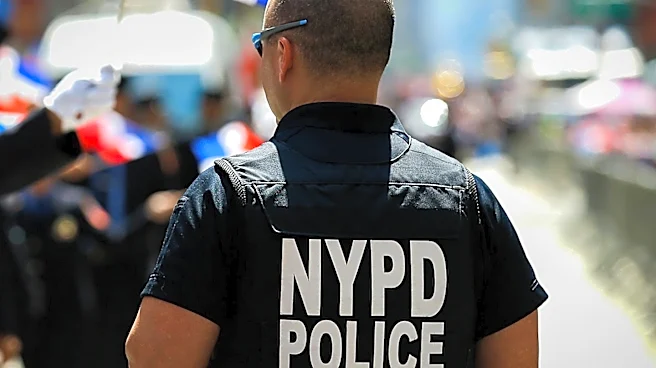
Residents of Crown Heights, Brooklyn, are expressing significant frustration and concern over the New York Police Department's (NYPD) decision to install additional steel barricades along Eastern Parkway days before the annual West Indian American Day
Carnival. While the NYPD traditionally lines the parkway with barricades to separate revelers from the parade route, this year, two extra lines of barriers have been added along the service road. Residents, including 78-year-old Georges Nathan, describe feeling 'encaged' and inconvenienced. Concerns include difficulty accessing cars, inability for elderly and disabled neighbors to be dropped off near their homes, and fears that emergency responders might face delays in reaching apartment buildings and fire hydrants. The parade, preceded by J'Ouvert, has seen past incidents of violence, including six people shot near the route last year, despite a heavy police presence.
Why It's Important?
This situation highlights a critical tension between public safety measures and community impact, particularly in diverse urban environments. While the NYPD's stated goal is to enhance security and prevent violence, the implementation of extensive barricades has inadvertently created significant inconvenience and a sense of alienation among long-term residents. This can erode trust between the community and law enforcement, potentially leading to decreased cooperation and increased resentment. The concerns about accessibility for the elderly, disabled, and emergency services are particularly salient, as they point to potential public safety hazards created by the very measures designed to ensure safety. Balancing security needs with the daily lives and rights of residents is crucial for fostering a harmonious urban environment.
What's Next?
The West Indian American Day Carnival and J'Ouvert are scheduled to proceed as planned, with the parade officially stepping off on Monday. The NYPD has not yet responded to specific resident concerns but maintains that the barricades are in place to allow police and emergency personnel free movement. Residents will likely continue to voice their frustrations, and community leaders may engage in dialogue with the NYPD to address the issues. In the aftermath of the parade, there will likely be a review of the effectiveness and impact of the increased barricades, potentially leading to adjustments in future event security planning. The incident may also spark broader discussions about community policing strategies and how to implement security measures in a way that minimizes disruption to residents.
Beyond the Headlines
The controversy over the barricades in Crown Heights delves into deeper issues of urban planning, community relations, and the perception of safety versus actual security. The residents' feeling of being 'encaged' speaks to a loss of autonomy and a sense of being treated as obstacles rather than integral parts of the community. This situation also brings to light the challenges of policing large cultural events, especially those with a history of violence. It raises questions about whether increased physical barriers are the most effective or appropriate solution, or if more community-centric approaches, focusing on de-escalation and engagement, might be more beneficial in the long run. The incident serves as a case study in how security measures, even well-intentioned ones, can have unintended social and psychological consequences on a community.