





What's Happening?
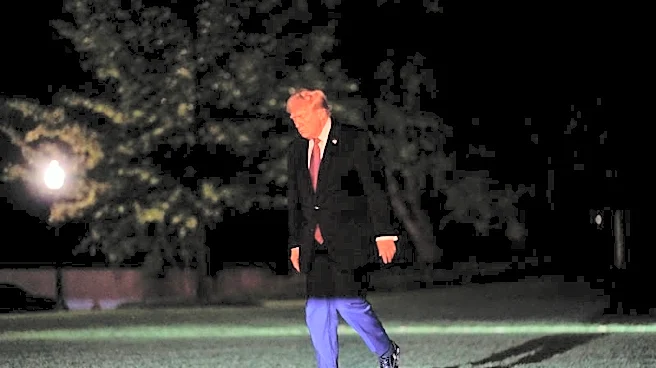
President Trump announced that U.S. negotiators will travel to Pakistan for another round of talks with Iran, aiming to extend a fragile ceasefire that is set to expire soon. The discussions are part of ongoing efforts to resolve tensions over the Strait
of Hormuz, a critical waterway for global oil trade. Iran has not confirmed the talks but has indicated a willingness to continue diplomatic efforts. The U.S. delegation, led by Vice President JD Vance, will include envoys Steve Witkoff and Jared Kushner. Security measures in Islamabad have been heightened in preparation for the talks. The situation remains tense as Iran has threatened to maintain control over the strait until the conflict ends, while the U.S. has imposed a blockade on ships heading to and from Iranian ports.
Why It's Important?
The outcome of these talks could significantly impact global oil markets and regional stability. The Strait of Hormuz is a vital passage for about one-fifth of the world's oil trade, and its closure has already contributed to a global energy crisis. A resolution could ease tensions and stabilize oil prices, benefiting economies worldwide. However, failure to reach an agreement could exacerbate the conflict, leading to further economic and political instability. The talks also hold implications for U.S.-Iran relations, potentially affecting future diplomatic and military engagements in the region.
What's Next?
If the talks in Pakistan are successful, they could lead to a temporary easing of tensions and possibly a more permanent resolution regarding the Strait of Hormuz. However, if negotiations fail, the U.S. may continue its blockade, and Iran could persist in its control over the strait, further straining international relations. The involvement of Pakistan as a mediator may also influence future diplomatic efforts in the region.
Beyond the Headlines
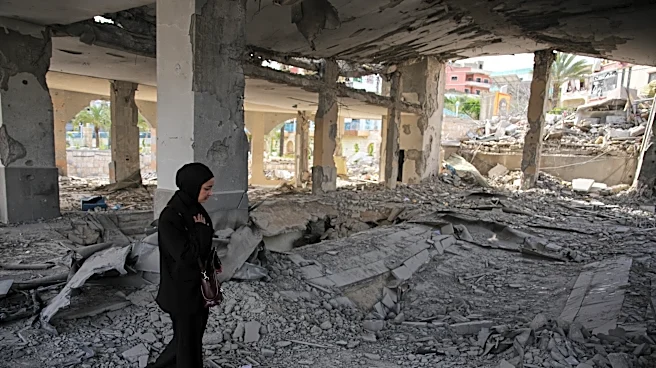
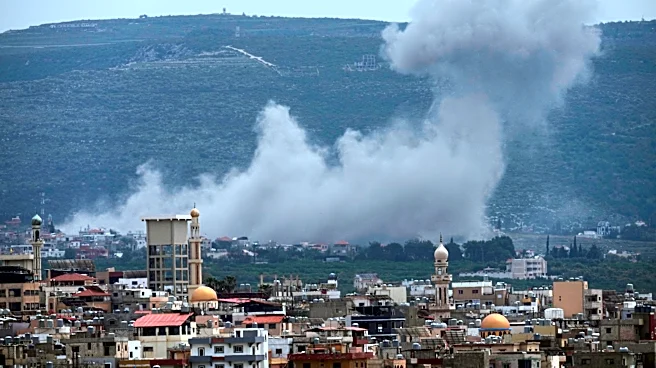
The ongoing conflict and negotiations highlight the complex geopolitical dynamics in the Middle East, involving not only the U.S. and Iran but also regional players like Israel and Hezbollah. The situation underscores the strategic importance of the Strait of Hormuz and the potential for regional conflicts to have global economic repercussions. Additionally, the talks reflect the broader challenges of nuclear non-proliferation and the balance of power in the region.