







What's Happening?
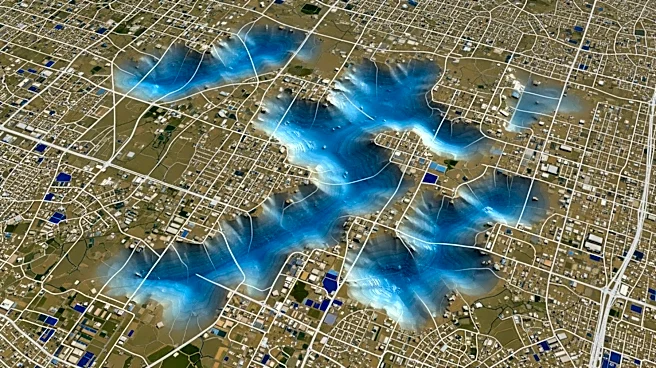
A recent study published in Scientific Reports has conducted a seismic risk assessment of Tashkent's residential buildings, revealing significant vulnerabilities in older structures. The research simulated a Mw 5.5 earthquake, similar to the historic
1966 Tashkent earthquake, and evaluated over 200,000 structures. Findings indicate that approximately 4% of older buildings are at risk of catastrophic failure, while modern monolithic constructions show strong resistance to seismic activity. The study utilized a digital twin model of Tashkent's built environment, classifying buildings into 18 typologies and assessing their structural performance using advanced software. The research highlights the uneven distribution of risk across the city, with older unreinforced masonry and adobe buildings being particularly vulnerable.
Why It's Important?
The study's findings have significant implications for urban planning and building safety in Tashkent and similar regions. By identifying vulnerable structures, authorities can prioritize retrofitting efforts and improve earthquake preparedness. The research supports the adoption of earthquake-resistant design standards and provides a framework for integrating seismic risk data into public digital platforms. This approach can enhance disaster preparedness, insurance modeling, and resource allocation during emergencies. The study also underscores the importance of modern construction techniques in mitigating seismic risks, offering valuable insights for developers and policymakers.
What's Next?
The integration of seismic risk data into public platforms will enable authorities to create a detailed inventory of structural risks, facilitating targeted retrofitting and replacement of outdated structures. As Tashkent continues to grow, applying these methods will be crucial in protecting infrastructure and populations from future seismic events. The study suggests that future work should include estimating economic losses and casualty modeling to support comprehensive risk planning. The adoption of digital building passports can further enable smarter urban management and targeted mitigation strategies.