



What's Happening?
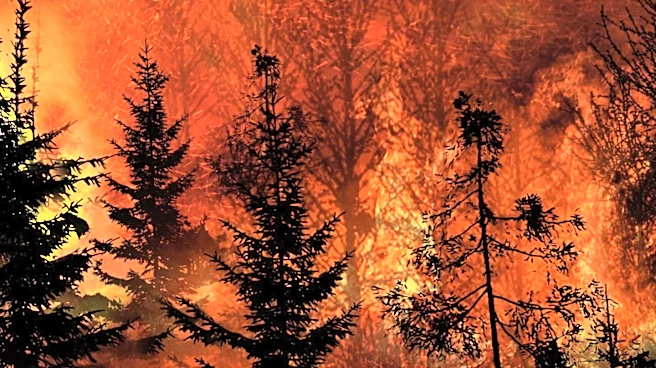
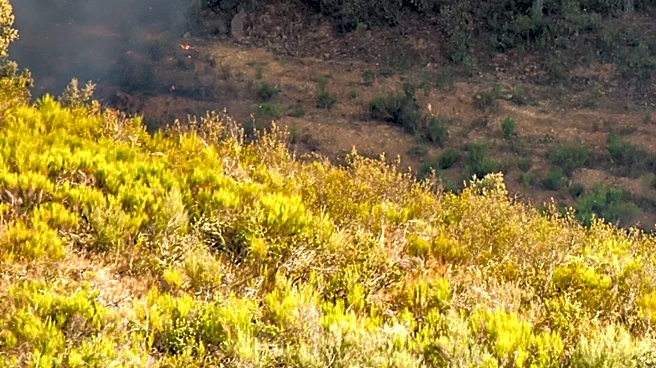
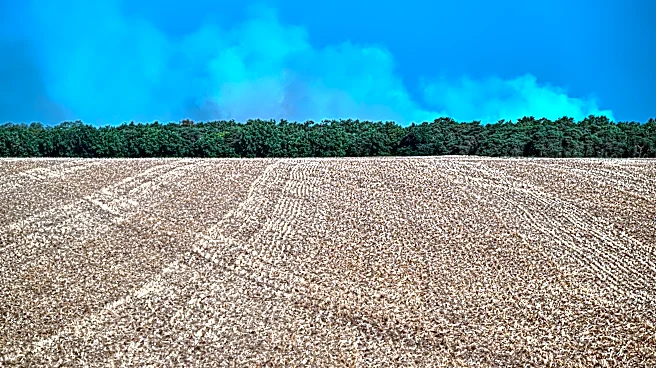
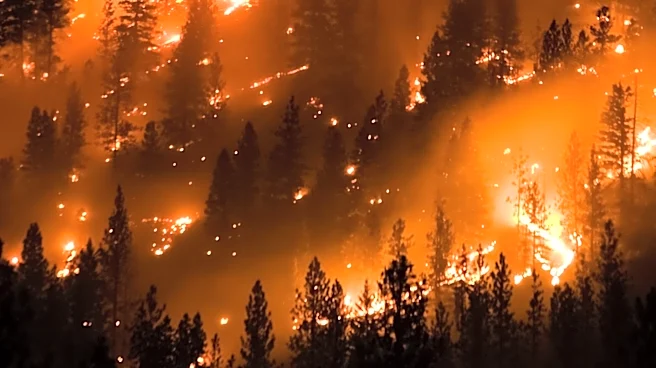
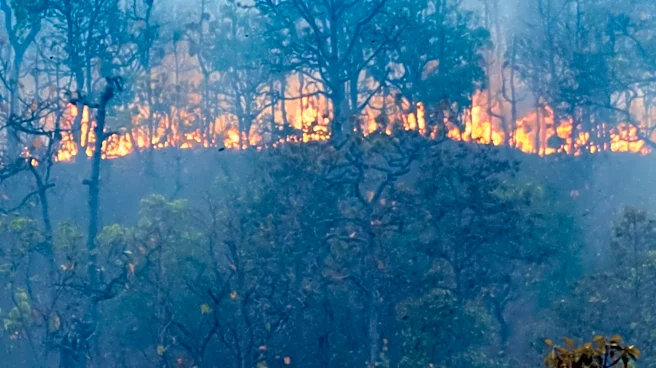
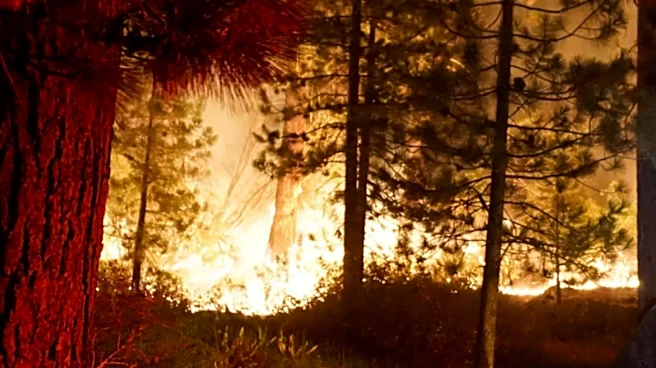
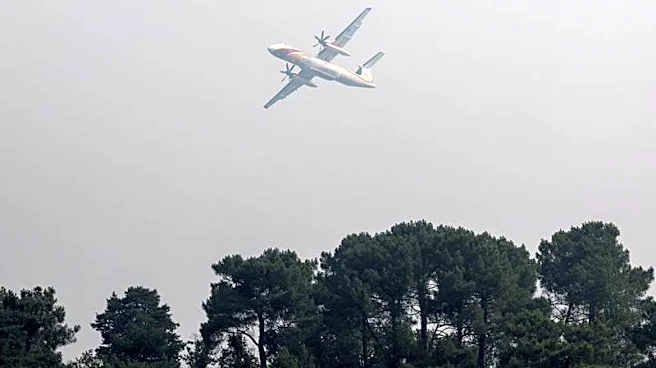
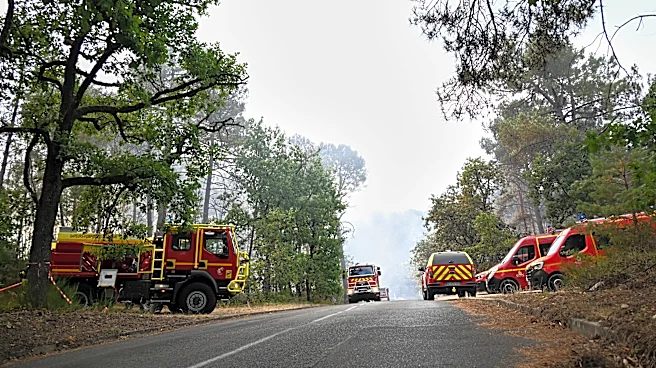
A major fire in the Fontainebleau forest, located south of Paris, has led to evacuations and significant disruptions in train and highway traffic. The fire, which is unusual due to its proximity to the French capital, has prompted the deployment of two
water-dumping planes and hundreds of firefighters to control the blaze. The incident is part of a series of wildfires affecting western Europe, exacerbated by the region's third heat wave of the summer, with temperatures reaching 104 degrees Fahrenheit in some areas. The fire has disrupted services at the Gare de Lyon train station and led to the closure of a section of the A6 highway. The situation highlights the increasing frequency and intensity of wildfires in Europe, attributed to rising temperatures and dry conditions.
Why It's Important?
The Fontainebleau forest fire underscores the growing challenges posed by climate change, as rising temperatures and prolonged heat waves increase the risk of wildfires. The incident highlights the vulnerability of densely populated areas to natural disasters and the strain on emergency services. The disruptions to transportation and the need for evacuations illustrate the broader impact of such events on daily life and infrastructure. As Europe continues to experience record-breaking temperatures, the frequency of wildfires is expected to rise, necessitating enhanced preparedness and response strategies. The situation also emphasizes the need for global efforts to address climate change and mitigate its effects on communities and ecosystems.