



What's Happening?
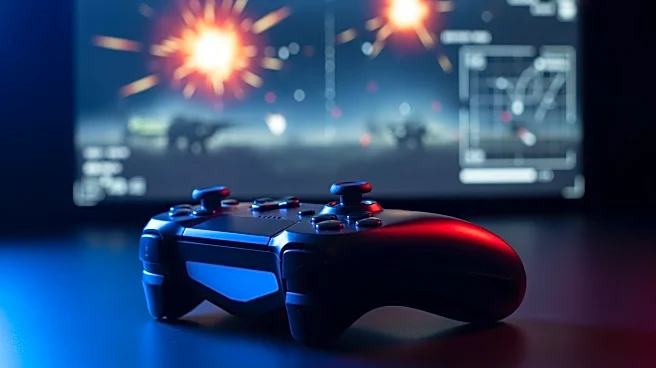
A video purportedly showing a US battleship shooting down an Iranian fighter jet has been identified as footage from the video game War Thunder, featuring World War II-era weapons. The clip, which went viral on social media, was shared by Texas Governor
Greg Abbott with the caption 'Bye bye,' before being deleted. The Agence France-Presse investigated and debunked the video, tracing it back to a Reddit thread. The footage, resembling the USS Tennessee, a decommissioned battleship, and a Nazi German Messerschmitt Me 163B-1a Komet, was confirmed by Gaijin Entertainment's head of public relations as likely being from War Thunder. The Pentagon has denied any recent incidents involving Iranian planes and US warships.
Why It's Important?
The incident highlights the growing issue of misinformation and the ease with which video game footage can be mistaken for real combat scenarios. This is exacerbated by the prevalence of generative AI deepfakes, contributing to a 'post-truth' environment where misinformation can spread rapidly. The sharing of such footage by a public official underscores the potential for misinformation to influence public perception and policy discussions. It also raises concerns about the role of social media platforms in moderating content and the responsibilities of public figures in verifying information before dissemination.
What's Next?
The incident may prompt discussions on the need for stricter content verification processes on social media platforms and among public officials. It could also lead to increased scrutiny of how video game footage is used and shared, particularly in the context of international relations and military conflicts. Social media companies might face pressure to enhance their content moderation policies to prevent the spread of misleading information.
Beyond the Headlines
The use of video game footage as real combat footage raises ethical questions about the manipulation of media for propaganda purposes. It also reflects broader societal challenges in distinguishing between reality and simulation in an age of advanced digital technologies. This incident could contribute to a growing discourse on media literacy and the importance of critical thinking skills in navigating digital content.