
What's Happening?
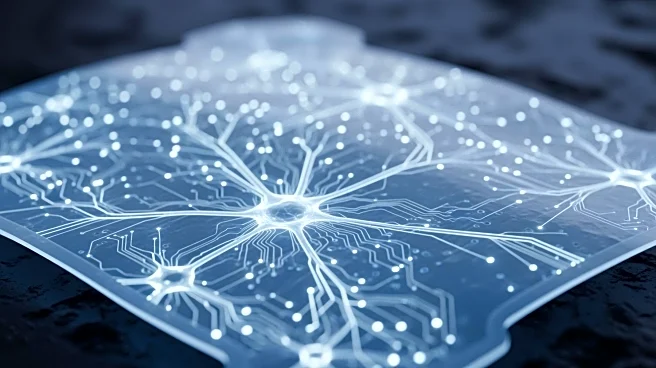
Researchers have developed a neuromorphic artificial skin designed for robotic applications, which mimics the complex sensory processing of human skin. This innovative system uses spiking circuitry to
replicate how sensory neurons transmit and integrate signals. The artificial skin is made from a flexible polymer embedded with pressure sensors, which are connected to the system through conductive polymers. These sensors convert pressure inputs into a series of electrical spikes, similar to the way biological systems convey information. The system is capable of identifying the location of input and injuries, and it processes these signals through multiple layers, allowing for reflexive responses without involving a central processing unit. This development represents a significant step in integrating energy-efficient hardware with AI-based control software for robotics.
Why It's Important?
The creation of neuromorphic artificial skin has significant implications for the field of robotics and artificial intelligence. By mimicking the human nervous system's ability to process sensory information, this technology could enhance the tactile capabilities of robots, making them more adept at interacting with their environment. This advancement could lead to more sophisticated robotic systems capable of performing complex tasks with greater precision and sensitivity. Additionally, the integration of energy-efficient hardware with AI control systems could reduce the power consumption of robotic devices, making them more sustainable and cost-effective. This technology could benefit industries ranging from manufacturing to healthcare, where robots equipped with advanced sensory capabilities could perform delicate operations or assist in patient care.
What's Next?
Future developments in this field may focus on expanding the sensory capabilities of the artificial skin to include other sensations such as heat and cold, further enhancing the functionality of robotic systems. Researchers may also explore the integration of this technology with existing robotic platforms to test its effectiveness in real-world applications. As the technology matures, it could lead to the development of more autonomous robots capable of performing a wider range of tasks. Additionally, collaboration with AI researchers could result in more advanced control systems that leverage the sensory data provided by the artificial skin, leading to smarter and more responsive robotic systems.