
What's Happening?
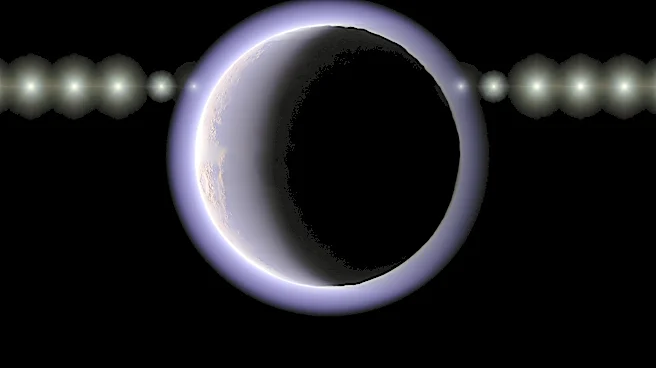
Astronomers have identified a planet candidate, HD 137010 b, which shares similarities with Earth in size and orbit. This discovery was made using data from the NASA Kepler Space Telescope, which operated
from 2009 to 2018. The planet is located 146 lightyears away and was detected using the transit method, where a planet crossing its star causes a dimming effect. The planet's potential to support liquid water places it within the habitable zone of its star. The discovery was aided by citizen scientists who highlighted the signal, leading to further investigation by researchers.
Why It's Important?
The discovery of HD 137010 b is significant as it adds to the growing list of potentially habitable exoplanets. Finding Earth-like planets is crucial for understanding the potential for life beyond our solar system. The planet's location around a brighter star allows for more detailed follow-up observations, which can provide insights into its composition and atmospheric conditions. This discovery highlights the importance of citizen science in contributing to astronomical research and the potential for future discoveries using similar methods.
What's Next?
Further observations are needed to confirm HD 137010 b as an exoplanet. Researchers will use ground-based instruments to gather more data and verify the planet's characteristics. The upcoming NASA Habitable Worlds Observatory may provide additional opportunities to study this planet in detail. Continued research will focus on confirming the planet's orbital period and assessing its potential habitability. The discovery underscores the need for advanced instruments capable of detecting and analyzing distant exoplanets.