




What's Happening?
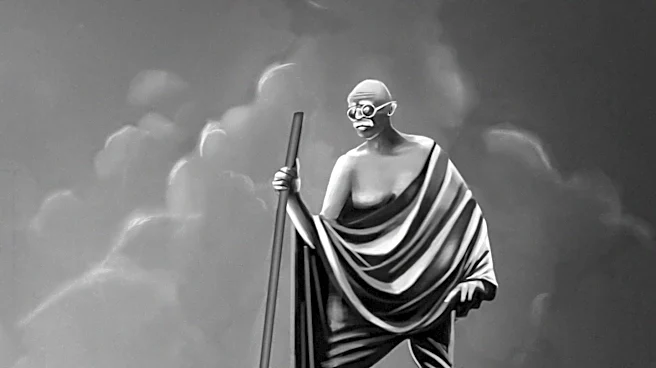
North Dakota has received its first life-size statue of Mahatma Gandhi, which was unveiled at Peace Park in downtown Bismarck on October 29. This installation marks a significant cultural addition to the state, facilitated by the Consulate General of India
in Seattle and supported by the Indian-American community and the North Dakota Trade Office. The ceremony was attended by North Dakota First Lady Kjersti Armstrong, Agriculture Commissioner Doug Goehring, and India's Consul General in Seattle. Peace Park, located at 400 East Front Avenue, was established after the September 11, 2001, attacks and also features a Peace Pole from the Gandhi Peace Network of North Dakota. This new monument brings the total number of Gandhi statues within the jurisdiction of the Indian Consulate in Seattle to five, with others located in Bellevue Public Library, Seattle's Space Needle, the Nebraska State Capitol in Lincoln, and the University of Montana in Missoula.
Why It's Important?
The unveiling of the Mahatma Gandhi statue in Bismarck signifies a growing cultural and diplomatic engagement between India and North Dakota. This initiative, supported by the Indian Consulate and the local Indian-American community, highlights efforts to foster international relations and cultural exchange at the state level. The presence of such a monument in a public space like Peace Park, which was created in response to a national tragedy, reinforces themes of peace and non-violence, principles central to Gandhi's philosophy. For the Indian-American community, it represents an acknowledgment of their heritage and contributions, strengthening their cultural identity within the state. Furthermore, the collaboration between the North Dakota Trade Office and the Indian Consulate suggests broader engagements in agriculture, business, and education, indicating a multifaceted relationship that extends beyond cultural symbolism.
What's Next?
The installation of the Mahatma Gandhi statue is expected to further enhance India-North Dakota ties, building on existing engagements in agriculture, business, education, and cultural activities. The Consulate General of India in Seattle has noted a growth in these interactions, including International Day of Yoga celebrations and consular outreach in Fargo. Future initiatives may include more cultural events, educational programs, and trade collaborations aimed at strengthening the bilateral relationship. The statue itself will serve as a permanent symbol of peace and a point of cultural reference, potentially attracting visitors and fostering greater understanding between different communities in North Dakota.
Beyond the Headlines
The placement of a Mahatma Gandhi statue in a U.S. state capital like Bismarck carries deeper implications beyond mere cultural exchange. It symbolizes the enduring influence of Gandhi's philosophy of non-violent resistance and peace on a global scale, resonating with American values of freedom and justice. In a time of increasing global interconnectedness, such monuments serve as reminders of shared human aspirations and the importance of diplomatic and cultural bridges. The involvement of the North Dakota Trade Office also subtly links cultural diplomacy with economic interests, suggesting that soft power can pave the way for more tangible partnerships. This event underscores a broader trend of international communities seeking to establish their cultural footprint in the U.S., enriching the nation's diverse cultural landscape and promoting cross-cultural dialogue.