



What's Happening?
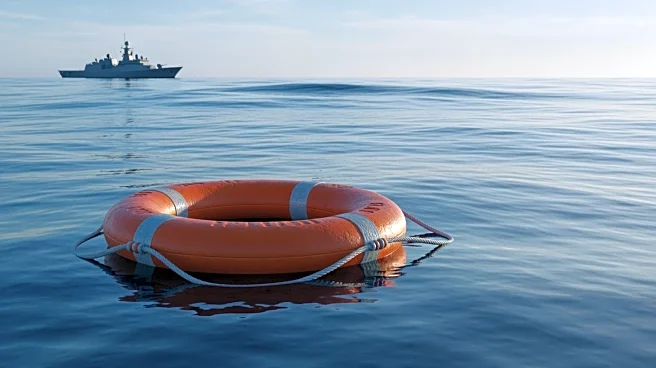
A Russian Navy salvage tug, the Alatau, successfully rescued a Philippine national who had been adrift in the South China Sea for two days. The seafarer had fallen overboard from a tanker named 'S Grace,' which is not listed in shipping databases. Despite
lacking an immersion suit or flotation aid, the survivor managed to stay afloat until the Alatau's crew found him. After being rescued, the seafarer was given a medical checkup and was found to be in good health. The Alatau, an Ingul-class fleet tug, is currently en route to Vladivostok, where it will rejoin Russia's Pacific Fleet. The crew plans to keep the survivor on board for the duration of the voyage, after which he will be offered repatriation.
Why It's Important?
This rescue operation underscores the critical role of naval fleets in providing emergency response and humanitarian aid in international waters. The successful rescue highlights the capabilities of the Russian Navy's Pacific Fleet in conducting search and rescue missions, which are vital for the safety of seafarers in the region. The incident also draws attention to the potential risks faced by maritime workers, emphasizing the need for stringent safety measures and protocols on vessels. Additionally, the event may influence international maritime cooperation and protocols, as it demonstrates the importance of readiness and coordination in rescue operations.
What's Next?
The rescued seafarer will remain on the Alatau until it reaches Vladivostok, where he will be offered repatriation. This incident may prompt discussions among maritime authorities and shipping companies about improving safety measures and emergency preparedness for seafarers. It could also lead to increased collaboration between nations in the region to enhance maritime safety and response capabilities. The Russian Navy's continued presence and operations in the Pacific may also be observed closely by other countries, potentially affecting regional maritime dynamics.