






What's Happening?
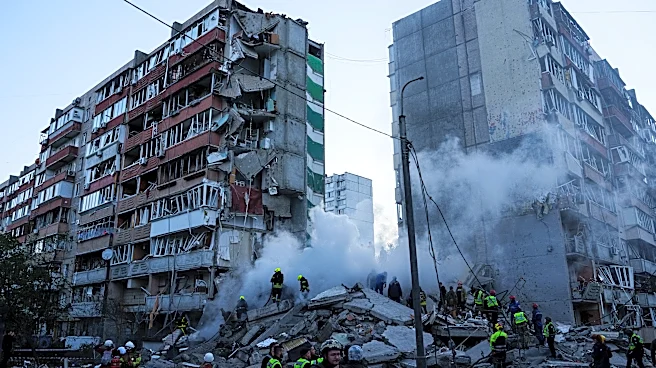
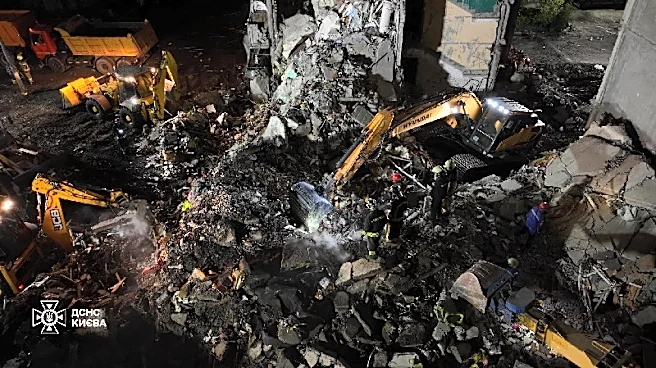
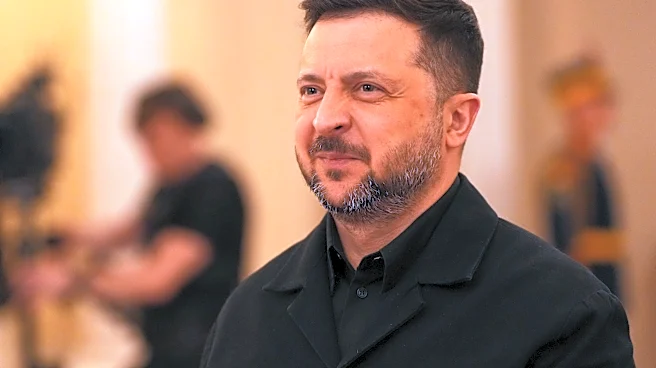
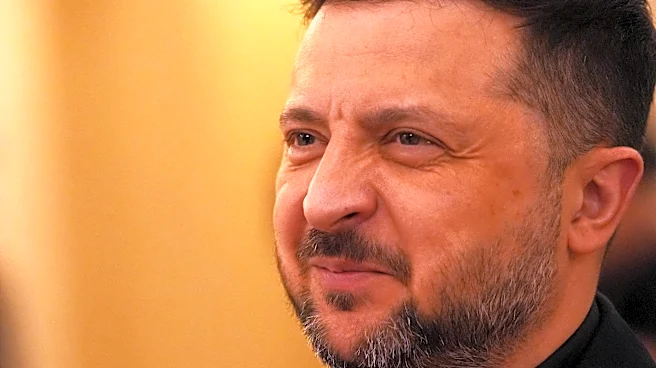
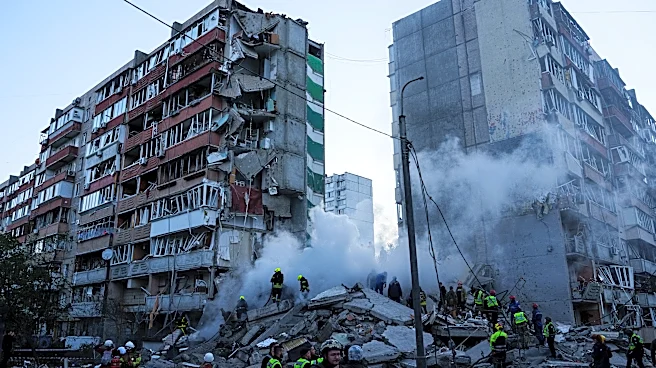
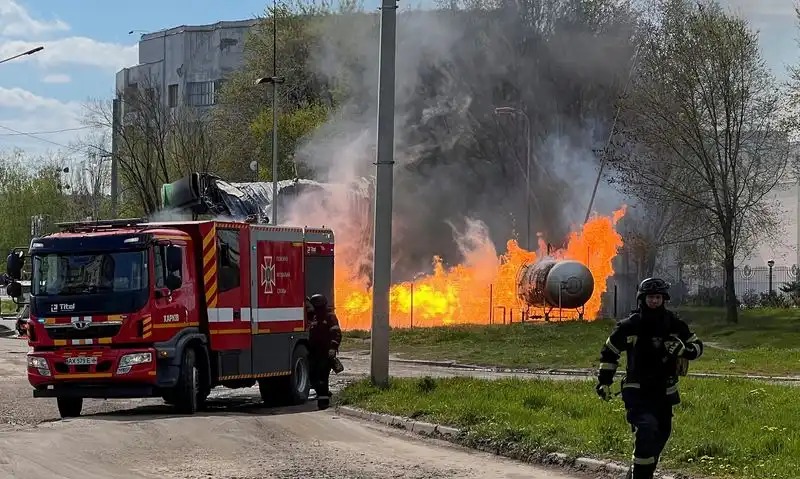
Ukrainian President Volodymyr Zelenskyy has reported a significant Russian missile attack on Kyiv, which resulted in the deaths of at least 24 people, including three children. The attack, described as 'massive and virtually nonstop,' involved over 1,500
drones and more than 50 missiles targeting the Ukrainian capital and other major cities over a two-day period. The assault led to the destruction of a residential building, a school, and a veterinary clinic, among other locations. President Zelenskyy condemned the attack as a deliberate terrorist tactic by Russia, aimed at overwhelming Ukraine's air defenses. Despite the interception of 94% of drones, only 73% of the missiles were successfully shot down, highlighting the need for improved defense capabilities.
Why It's Important?
The attack underscores the ongoing conflict between Ukraine and Russia, with significant implications for international relations and regional stability. The timing of the assault, coinciding with President Trump's visit to China, suggests a strategic move by Russia to draw global attention and disrupt diplomatic efforts. The high civilian toll and the targeting of non-military sites highlight the humanitarian impact of the conflict, raising concerns about the protection of civilians in war zones. The incident also emphasizes the need for international support to bolster Ukraine's defense systems and address the humanitarian crisis resulting from the conflict.
What's Next?
In response to the attack, President Zelenskyy has called for increased international support and cooperation to enhance Ukraine's defense capabilities. The Ukrainian government is likely to seek further assistance from Western allies to strengthen its air defense systems. Additionally, diplomatic efforts to negotiate a ceasefire or peace agreement may intensify, with potential involvement from international organizations and neighboring countries. The ongoing conflict and its impact on civilian populations will continue to be a focal point in international discussions and policy decisions.
Beyond the Headlines
The attack on Kyiv highlights the broader geopolitical tensions between Russia and Western nations, with potential long-term implications for global security and diplomatic relations. The conflict has already strained relations between Russia and the West, leading to economic sanctions and political isolation for Russia. The humanitarian crisis resulting from the conflict may also prompt increased international aid and support for displaced populations. Furthermore, the attack raises ethical questions about the conduct of warfare and the protection of civilians in conflict zones, potentially influencing future international policies and agreements on warfare conduct.