
What's Happening?
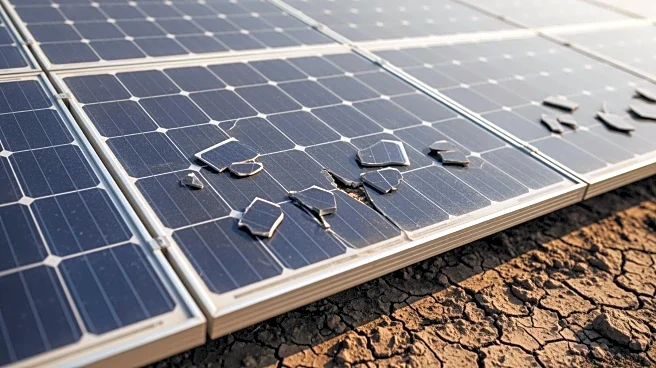
India's rapid expansion in solar energy, now the world's third-largest solar producer, is facing a significant challenge in managing solar panel waste. Despite the success in reducing reliance on coal,
the country lacks a comprehensive plan to handle the waste generated by solar panels, which typically last about 25 years. The panels, made of recyclable materials like glass and aluminum, also contain toxic metals such as lead and cadmium, posing environmental risks if not properly managed. Currently, India has no dedicated budget for solar-waste recycling and only a few small facilities to process old panels. A study by the Council on Energy, Environment and Water (CEEW) estimates that India could generate over 11 million tonnes of solar waste by 2047, requiring significant investment in recycling facilities.
Why It's Important?
The issue of solar waste management is crucial as it impacts the sustainability of renewable energy initiatives. Without proper recycling infrastructure, the environmental benefits of solar energy could be undermined by the pollution from discarded panels. This situation presents both a challenge and an opportunity for businesses specializing in waste management and recycling technologies. Efficient recycling could reclaim valuable materials and prevent millions of tonnes of carbon emissions from mining. The development of a robust recycling framework is essential for maintaining the environmental integrity of India's renewable energy strategy and could serve as a model for other countries facing similar challenges.
What's Next?
India's government and private sector need to collaborate to establish a comprehensive recycling infrastructure for solar waste. This includes setting up dedicated recycling facilities and enforcing regulations to ensure safe disposal and recycling of solar panels. The policy landscape in India is still developing, and there is a need for a regulatory framework that mandates manufacturers to take responsibility for the end-of-life management of their products. As the volume of solar waste is expected to rise significantly, timely action is necessary to prevent a potential environmental crisis.