
What's Happening?
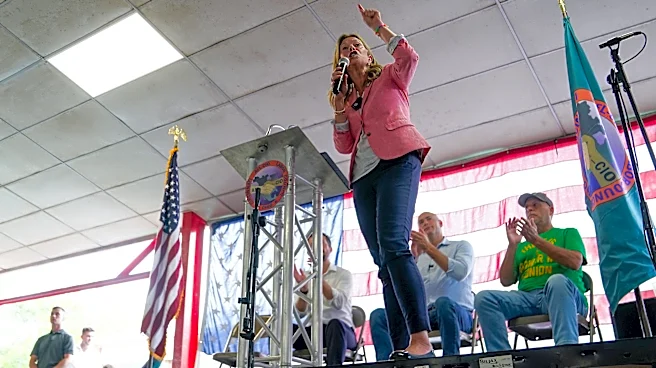
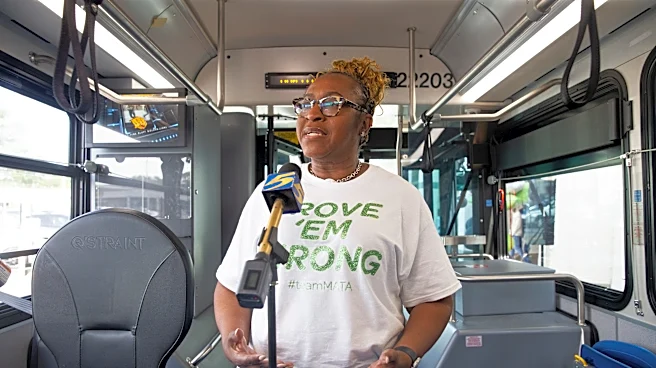
Senator Marsha Blackburn, the Republican nominee for Tennessee's gubernatorial race, has not committed to participating in a series of debates proposed by her Democratic opponent, Memphis City Councilmember
Jerri Green. Blackburn previously declined to debate other Republican candidates during the primary election. Despite the lack of direct debates, both candidates participated in a 30-issue policy questionnaire, which revealed significant differences in their approaches to governance. Blackburn's responses generally support the current conservative direction of Tennessee, emphasizing low taxes to attract businesses and punitive measures in criminal justice and immigration, including advocating for accelerated executions and the use of the electric chair. Green, in contrast, proposes detailed policy changes across various sectors, such as increasing the minimum wage to at least $20, disengaging from federal immigration enforcement, and halting executions. The questionnaire highlighted that the candidates diverge on nearly every issue, aligning closely with their respective party's views.
Why It's Important?
The contrasting policy positions of Senator Blackburn and Councilmember Green are significant for Tennessee's future direction. Blackburn's stance on maintaining low taxes and a conservative political environment suggests a continuation of policies aimed at business attraction, which could appeal to corporations but may not address concerns about worker wages or social safety nets. Her support for punitive criminal justice measures, including accelerated executions and the electric chair, indicates a tough-on-crime approach that could have profound implications for civil liberties and the state's justice system. Conversely, Green's proposals for a higher minimum wage, criminal justice reform, and disengagement from federal immigration enforcement represent a potential shift towards more progressive social and economic policies. These differences highlight a fundamental ideological divide that will shape the state's economic development, social programs, and legal framework, impacting various segments of the population, from low-income workers to those involved in the criminal justice system.
What's Next?
As the general election approaches, the absence of direct debates between Senator Blackburn and Councilmember Green means that voters will primarily rely on their stated policy positions and campaign messaging to make informed decisions. Blackburn's campaign has not indicated any change in its stance regarding debates, suggesting this trend will continue. Green's detailed policy suggestions, while offering clear alternatives, face the challenge of passing through Tennessee's Republican supermajority legislature, even if she were to win the governorship. The focus will likely remain on how each candidate articulates their vision for Tennessee through other channels, such as public appearances, policy papers, and media statements. The election outcome will determine whether Tennessee continues its current conservative trajectory or if there is a shift towards more progressive governance, particularly concerning economic and social reforms.
Beyond the Headlines
The dynamic between Senator Blackburn and Councilmember Green extends beyond typical policy debates, touching upon deeper philosophical differences regarding the role of government and societal values. Blackburn's emphasis on Tennessee as a 'haven of conservative politics' reflects a broader national trend of states solidifying their ideological identities, potentially leading to further polarization. Her campaign's funding sources, including private prisons, big tobacco, and AI data centers, raise questions about the influence of corporate interests on policy-making, particularly in areas like criminal justice and economic regulation. Green's advocacy for reforms and protections for vulnerable populations, alongside her challenge to existing federal immigration enforcement agreements, highlights a push for a more inclusive and equitable society. This election is not just about specific policies but also about the fundamental direction of Tennessee's social contract and its alignment with national political currents, potentially influencing future legislative battles and the state's demographic and economic landscape.