



What's Happening?
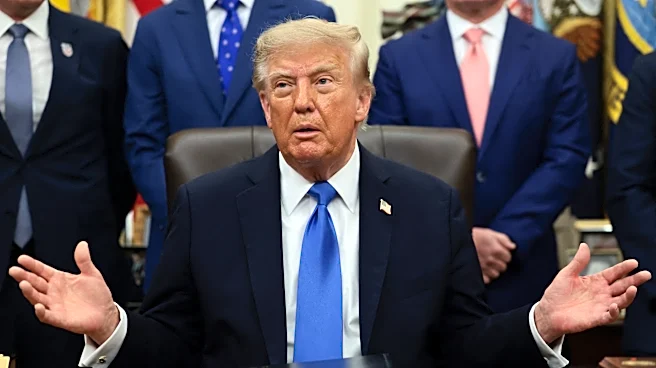
President Trump made a statement regarding the weight-loss drug Ozempic, claiming that a friend of his purchased the medication at a significantly lower price in the United Kingdom compared to the United States. During a speech, President Trump mentioned
that his Wall Street friend paid $86 for Ozempic in the UK, whereas the same medication would cost approximately $1,300 in New York. He also made a critical remark about his friend's appearance despite using the drug, stating, 'He was taking some fat drugs. I said, 'Are you taking this stuff? It’s not working. You look like ****.'' This comment highlights a perceived disparity in drug pricing between the two countries and offers a personal, albeit critical, observation on the drug's effectiveness.
Why It's Important?
President Trump's remarks draw attention to the significant differences in pharmaceutical pricing between the U.S. and other developed nations, specifically the UK. The substantial price gap he cited for Ozempic—$1,300 in New York versus $86 in the UK—underscores a long-standing debate about drug affordability and healthcare costs in the United States. This issue is a critical concern for American consumers, healthcare providers, and policymakers, as high drug prices can impact access to essential medications and contribute to rising healthcare expenditures. His comments, while anecdotal, could reignite public discussion and political pressure on pharmaceutical companies and government bodies to address drug pricing policies in the U.S.
What's Next?
President Trump's comments are likely to contribute to ongoing discussions about drug pricing and healthcare reform in the U.S. While his statement was informal, it could prompt further scrutiny from consumer advocacy groups and politicians regarding the cost of prescription medications. Pharmaceutical companies may face renewed pressure to justify their pricing strategies in the U.S. market. It is also possible that this anecdote could be used in future political campaigns or policy debates to highlight the need for measures to lower drug costs for American citizens. The broader public will likely continue to compare U.S. drug prices with those in other countries, maintaining pressure for change.
Beyond the Headlines
Beyond the immediate issue of drug pricing, President Trump's comments touch upon the broader implications of healthcare access and the role of personal anecdotes in public discourse. The stark contrast in drug costs raises ethical questions about equitable access to life-improving medications across different countries. Furthermore, his candid and somewhat blunt assessment of his friend's appearance, despite using the drug, reflects a cultural emphasis on physical appearance and the often-unrealistic expectations associated with weight-loss solutions. This incident also highlights how personal observations from influential figures can quickly become part of national conversations, influencing public perception and policy debates on complex issues like healthcare and pharmaceutical regulation.